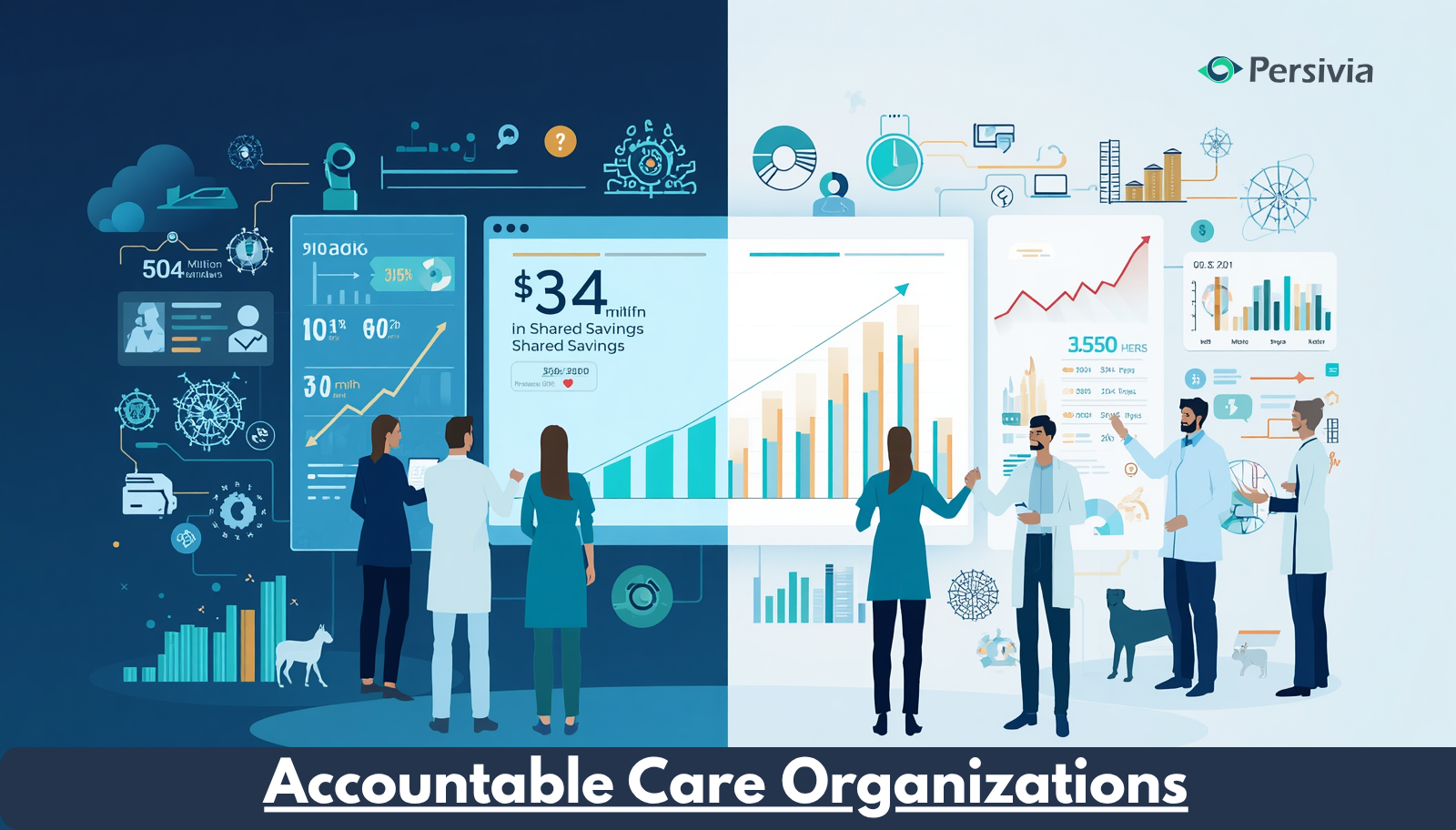
Most Accountable Care Organizations are fighting the same battle to cut costs, close care gaps, and survive CMS reconciliation without landing in the red. But very few do it at the scale McLaren Health Care did. They generated more than $34 million in shared savings and ranked among the top-performing MSSP ACOs in the country.
This wasn’t accidental. It came down to deliberate operational decisions, while many Accountable Care Organizations were still working with fragmented data and reactive processes.
Here’s what they did differently and what it means for your organization.
The Operational Reality McLaren Was Dealing With
Before the results, there was a real problem. McLaren is a large Midwest health system with 14 hospitals, over 4,400 providers, and more than 550,000 covered lives across multiple payers and value-based care contracts.
The challenge wasn’t clinical capacity. It was data and operational infrastructure. Disconnected EMR systems, fragmented data, and manual processes delayed critical decisions, reduced the accuracy of risk scores, and made financial performance visible only months later.
What Fragmentation Was Costing Them
When data doesn’t flow, both reporting and patient outcomes suffer. Here’s what broke down:
- Physicians lacked real-time visibility into which patients needed immediate follow-up
- Care managers duplicated work across platforms without a unified view
- HCC coding was incomplete, directly undercutting benchmark performance
- Quality measure gaps were discovered too late to close within the performance year
- Financial forecasting was reactive, and teams identified problems only after costs had already increased
How They Fixed It: One Platform, Full Visibility
McLaren replaced their fragmented multi-vendor setup with a single integrated digital health platform that pulled data from 30+ EMR systems into one unified environment. Care management, quality tracking, risk adjustment, and provider engagement all ran through one system, giving every team member the same real-time picture. This shift significantly improved operational efficiency across teams.
Smarter Risk Stratification
Instead of reviewing patients reactively, McLaren’s care teams used AI-driven multi-layered risk stratification to identify high-cost, high-risk patients months before acute episodes occurred. Resources were deployed proactively, not after a hospitalization had already happened.
HCC Capture at Scale
Most ACOs leave significant benchmark money on the table through incomplete risk coding. McLaren significantly improved HCC capture, strengthening their benchmark position and creating more room for shared savings. This is one of the most impactful levers in ACO performance, and it’s consistently underused.
Driving Down Readmissions
McLaren used real-time alerts and structured care transition workflows to significantly reduce 30-day all-cause readmission rates. This is not an incremental improvement. It reflects a shift from episodic care to coordinated care across inpatient, outpatient, and post-acute settings.
The Numbers That Tell the Story
| Metric | Result |
| Shared Savings Generated | $34M+ |
| National MSSP ACO Ranking | 6th Best |
| Operational Efficiency Gain | 90% |
| HCC Capture Improvement | 120% |
| 30-Day Readmission Reduction | 65% |
| EMR Systems Integrated | 30+ |
What This Means for ACOs Preparing for What’s Next
The results McLaren achieved are directly relevant to where healthcare is heading. The CMS LEAD Model, the Long-term Enhanced ACO Design, launches January 1, 2027, replacing ACO REACH with Medicare’s longest commitment to value-based care: a full 10-year performance period.
For organizations with strong operational infrastructure, LEAD presents a clear opportunity. For those still operating on disconnected systems, it will be a significant challenge.
The CMS LEAD Model rewards exactly what McLaren built: stable benchmarks, accurate risk capture, predictable financial performance, and scalable care coordination. ACOs that want to compete in that environment need the same foundation McLaren invested in, not after 2027, but now.
Bottom Line
McLaren’s $34 million in savings came from solving the operational problems most ACOs accept as normal. Unified data, AI-driven risk stratification, accurate HCC coding, and real-time care coordination. These weren’t extraordinary moves. They were disciplined, systematic execution using the right platform.
The gap between top-performing and average Accountable Care Organizations is not clinical. It’s infrastructure. And the organizations closing that gap today are the ones that will lead the next decade of value-based care.
See What CareSpace® Can Do for Your ACO
Persivia offers CareSpace®, the AI-powered population health platform behind McLaren’s results. From predictive analytics and risk adjustment to care management and point-of-care integration, CareSpace® helps your organization identify savings opportunities and manage costs more effectively. Whether you’re in MSSP, preparing for ACOs under the CMS LEAD Model, or managing complex VBC contracts, CareSpace® is built to perform at every stage.
If you want similar results for your organization, contact Persivia.