Japanese car auctions are one of the most trusted sources for quality used vehicles. Every week, thousands of cars pass through auction houses, giving overseas buyers access to a wide variety of makes and models at competitive prices. However, many buyers believe that an auction inspection report tells them everything they need to know about a vehicle. In reality, auction inspectors work within strict guidelines and limited time, meaning some important details may never appear on the auction sheet.
If you are considering buying Japanese used cars in UK, understanding what inspectors do and do not explain can help you make better purchasing decisions and avoid unexpected costs.
Auction Inspections Are Designed to Be Quick
A common misconception is that every vehicle undergoes a detailed mechanical inspection before being listed. In fact, inspectors typically have only a few minutes to assess each car.
Their job is to provide a standardized overview rather than a complete diagnostic report. They examine the vehicle’s exterior, interior, visible condition, and basic operation, but they do not dismantle components or perform advanced testing. Because of this, some issues may not become apparent until the vehicle has been driven after export.
Auction Grades Are Not Guarantees
Many buyers place too much emphasis on auction grades. While these grades are useful for comparing vehicles, they are not promises of perfection.
A Grade 4 car generally indicates good overall condition, but it may still have cosmetic flaws or age-related wear. Likewise, a Grade 3.5 vehicle could be mechanically reliable despite showing more visible imperfections.
Rather than relying only on the grade, buyers should also review the auction sheet, damage diagram, and available photographs to gain a fuller understanding of the vehicle.
Mechanical Checks Are Limited
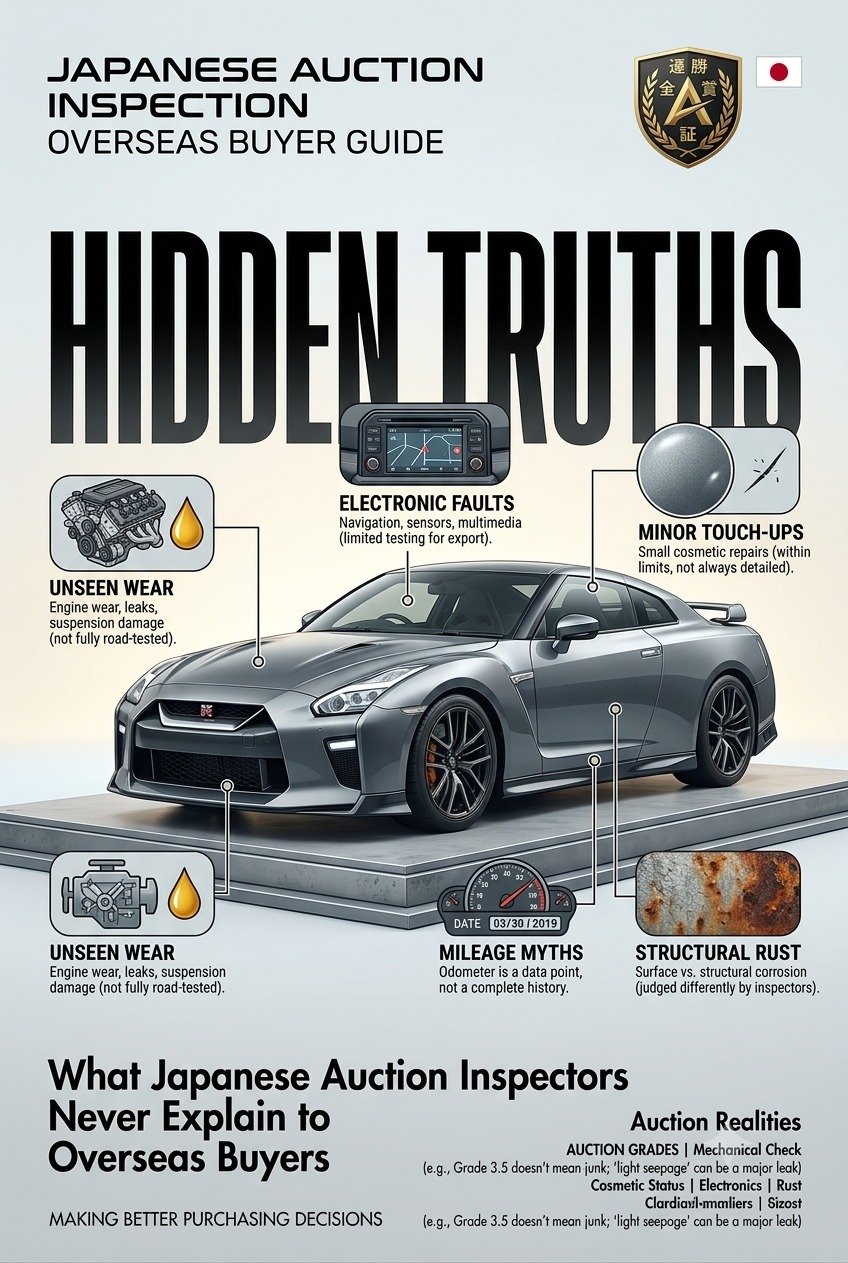
Auction inspectors perform only basic mechanical evaluations. They usually confirm that the engine starts, the transmission appears to function normally, and there are no obvious warning lights or severe fluid leaks.
However, they generally do not perform extensive road tests or inspect internal engine components. Problems such as worn suspension parts, transmission wear, or engine issues may not be visible during a brief inspection.
This is why experienced importers often recommend obtaining an independent inspection whenever possible.
Minor Cosmetic Repairs May Go Unmentioned
Japanese vehicles are often well cared for, but small cosmetic repairs are common. Minor paint touch-ups, bumper repairs, or light scratches may not receive detailed explanations if they fall within acceptable auction standards.
The inspection diagram identifies noticeable damage, but tiny imperfections are often considered normal for a used vehicle. Buyers should expect a reasonable amount of wear, especially on older models.
Rust Is Judged Differently
Vehicles from regions of Japan that experience snow may develop surface rust underneath the car. Auction inspectors usually distinguish between light surface rust and serious structural corrosion.
Small amounts of oxidation are often viewed as normal and may not receive significant attention in the report. Buyers unfamiliar with Japan’s climate should carefully examine underbody photographs when available.
Electronic Features Are Not Fully Tested
Modern vehicles include many electronic systems, but inspectors cannot test every feature during a short inspection.
Items such as navigation systems, parking cameras, heated seats, adaptive cruise control, or infotainment functions may receive only a basic check. Some systems could develop faults later that were not apparent during the inspection.
In addition, many factory-installed Japanese navigation units and multimedia systems are designed for the domestic market and may require replacement or modification before being used overseas.
Low Mileage Doesn’t Always Mean Better
Many buyers automatically prefer vehicles with low mileage, assuming they are in excellent condition. While mileage is an important factor, it does not tell the whole story.
A low-mileage vehicle that has spent long periods parked may still require maintenance due to aging batteries, rubber seals, or fluids. Meanwhile, a higher-mileage car with a strong maintenance history may prove more dependable over time.
Looking beyond the odometer can help buyers make a more balanced decision.
Auction Comments Can Be Brief
Auction sheets often contain short notes rather than detailed explanations. Comments such as “small scratch,” “light oil seepage,” or “interior wear” may seem vague to first-time buyers.
Professional exporters understand these terms and can explain what they usually mean in practice. This extra guidance can help overseas buyers avoid misunderstandings and make more informed choices.
Vehicles Are Sold As They Are
One fact that surprises many first-time buyers is that auction vehicles are generally sold “as is.” Once a vehicle is purchased, the buyer assumes responsibility for its condition.
This does not mean the auctions are unreliable. Japanese auction houses have earned an excellent reputation for honesty and consistency. However, the inspection report should be viewed as a helpful summary rather than a warranty against future repairs.
Setting realistic expectations is an important part of buying through auctions.
Why Working With a Trusted Exporter Matters
A reputable exporter provides far more than simply placing auction bids. Many experienced exporters carry out additional inspections, provide extra photographs, explain auction terminology, and answer questions before a purchase is finalized.
This added level of support helps overseas buyers better understand a vehicle’s true condition and reduces the likelihood of unpleasant surprises after arrival.
For anyone purchasing Japanese used cars in UK, partnering with an experienced exporter can add valuable peace of mind throughout the buying process.
Conclusion
Japanese auctions remain one of the most transparent and efficient ways to purchase quality used vehicles. Their grading system and inspection process provide valuable information, but they are not intended to be comprehensive mechanical evaluations. Understanding the limitations of auction inspections allows buyers to make smarter decisions and interpret reports more accurately.
Whether you are an experienced importer or buying your first vehicle through Japanese car auctions, combining auction information with expert advice and careful research is the best way to purchase with confidence.