You put a necklace away neatly, and a week later, it comes out in a knot. Nothing touched it, yet the chain is wound around its own clasp, and the pendant is trapped somewhere in the middle. It feels like bad luck, but it’s closer to physics.
For jewelry brands, this matters more than it seems. A customer who opens a box and finds a tangled chain doesn’t think “shipping problem.” They think “poor quality.” So let’s look at why chains tangle and how packaging can stop it.
Why do chains tangle in the first place
Researchers have studied this. In a well-known 2007 experiment, scientists shook a length of string inside a box and found that knots formed within seconds, often without any human help. The longer and more flexible the string, the more likely it was to knot.
A necklace is a flexible line with a clasp at one end, so it behaves much the same way. Every bump, shake, and turn gives it another chance to loop over itself. Once one loop forms, motion tends to tighten it rather than undo it. A parcel travelling across the country goes through thousands of tiny movements like that.
Three things make tangles worse:
- Free space. A chain that can move around in a large compartment has room to loop and twist.
- Length and thinness. Fine, long chains, such as box chains or delicate cable chains, tangle far faster than chunky curb chains.
- Loose ends. An unsecured clasp and a dangling pendant are like hooks. They catch on the links and pull the chain into a knot.
The fix isn’t complicated. If the chain can’t move, it can’t tangle.
What good packaging actually does
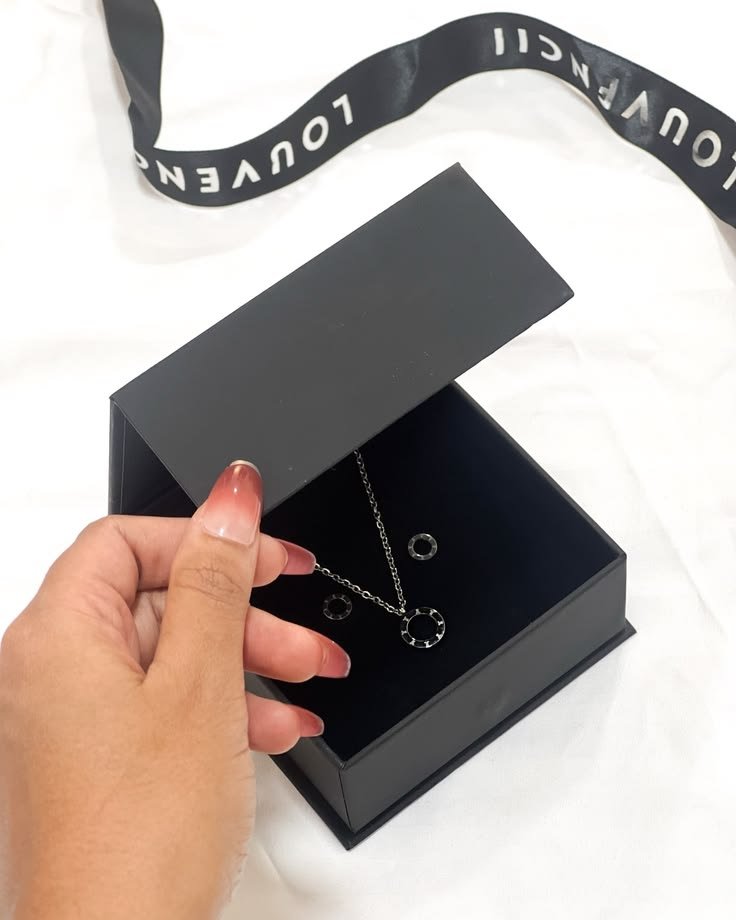
Good jewelry packaging controls movement. It gives the necklace one fixed path to lie in, secures the ends, and keeps the chain from touching itself.
Here are the most common ways to do that.
| Packaging method | How it prevents tangles | Best for | Things to watch |
| Card with slits or notches | Holds the chain in place along its length | Fine and mid-weight chains | Card must be sturdy or the chain slips out |
| Foam insert with a carved groove | Locks the chain into a set channel | Premium necklaces, longer chains | Groove depth must match chain thickness |
| Velvet-wrapped pillow or bar | Chain drapes around a form, so it can’t bunch up | Pendants and gift sets | Needs a snug box so the pillow doesn’t shift |
| Straw or tube threading | The chain runs through a straw, so it can’t loop | Very delicate chains | Not ideal for pendants with large charms |
| Pouch with a divider | Separates multiple pieces in one bag | Travel and multi-piece sets | Less protection against compression |
Foam inserts and notched cards do most of the work in retail packaging, but they only work if the cut matches the product.
The small details that make a difference
Most tangle problems come from small mistakes. A slit that’s too wide lets the chain slide out. A foam groove that’s too shallow lets it sit on top and shift. A clasp that isn’t tucked into a small slot swings freely and drags the chain with it.
Securing the clasp end is probably the single most useful thing you can do. If both ends of the chain are anchored, the middle has very little room to knot. A pendant needs the same treatment. Give it its own recess so it doesn’t swing like a weight at the bottom of the chain.
It also helps to keep the necklace flat or gently curved, not folded. Tight folds push links against each other, and that’s where they catch.
The box has to support the insert
An insert can only do its job if the box holds it steady. If the whole insert slides around inside a roomy box, the chain moves with it.
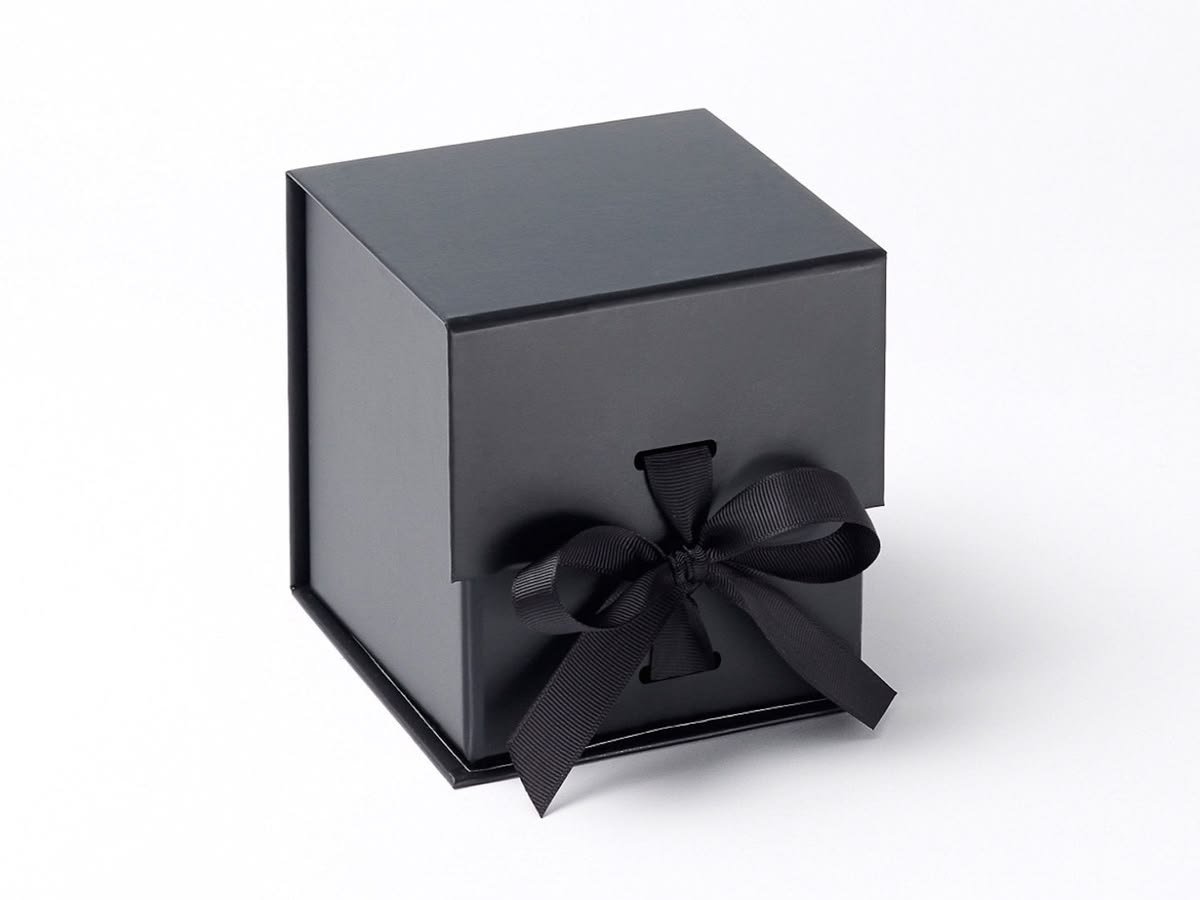
That’s why box structure matters just as much as the cushioning. A rigid base, a lid that fits closely, and a tray cut to the exact size of the insert keep everything still, even on a long delivery route. Magnetic closures help here too, because the lid stays shut firmly during shipping.
Thickness matters as well. A thin box can flex under pressure, squeezing the insert and pushing the chain out of its groove. Sturdy board avoids that.
Where cosmetics and jewellery packaging overlap
Jewellery brands often look at how the beauty industry presents small, high-value products, and for good reason. A luxury jewellery packaging box in USA markets is built around fitted trays, firm structure, and a satisfying unboxing moment, and all of that translates well to necklaces. The same rigid construction, soft-touch finishes, and custom inserts that keep a serum bottle upright can keep a chain flat and untangled.
If you’re sourcing boxes, it’s worth looking at suppliers who work across both categories. They tend to understand how to build precise inserts, which is exactly what chain protection needs.
Testing before you commit
Here’s something you can do at your desk. Take a finished sample and put your real necklace in it. Close the box. Shake it for thirty seconds, tilt it, turn it upside down, and tap it on the table. Open it and check the chain.
If it has moved at all, the insert needs adjusting. Then try the harder version: ship the sample to a friend in another state and ask them to open it. Real couriers are rougher than any desk test.
Test your thinnest chain, not your thickest one. A box that holds a delicate chain will usually hold a chunky one, but the other way around doesn’t work.
A quick checklist
| Question | Why it matters |
| Is the chain fixed along its length? | Stops it from looping on itself |
| Are the clasp and pendant secured separately? | Removes the main snag points |
| Does the insert fit the box tightly? | Prevents the whole tray shifting |
| Is the board thick enough to resist squeezing? | Keeps grooves and slits intact |
| Did you test with the thinnest chain? | Catches the worst-case failure |
| Did you ship a real sample? | Shows how it behaves in transit |
Final thoughts
Tangles aren’t random bad luck. They’re what happens when a long, flexible chain gets room to move. Take away the room and the problem mostly disappears.
Brands that plan for this, with fitted inserts, anchored clasps, and a firm box around them, send out necklaces that look the way they did in the workshop. And a customer who opens a box to find a clean, untangled chain starts out with a good impression of everything that follows.