A Royal Enfield purchase can involve an upfront contribution and a series of monthly repayments instead of one large payment. Understanding how down payment, loan principal, interest and tenure fit together helps you compare offers without overlooking the total amount you will repay. This matters particularly when choosing between entry-level Royal Enfield models and more expensive cruiser bikes.
Start with the amount you actually need to finance
A lender does not necessarily finance the full cost of a motorcycle. Your initial contribution may include a portion of the motorcycle’s price, while registration, insurance and optional accessories may be handled differently under each loan product. The dealer’s invoice and the lender’s sanctioned amount are therefore separate figures.
Ask for a written cost breakup and identify which amounts are included in the financed principal. A lower advertised down payment may appear attractive, but it can leave more money accumulating interest. Compare the amount paid today and the sum of all future instalments before selecting a plan.
How the down payment changes the monthly instalment
Suppose a buyer is considering a motorcycle with an illustrative ex-showroom value of Rs. 2,40,000. An upfront contribution of Rs. 40,000 leaves Rs. 2,00,000 to finance if the lender covers only that balance. Paying Rs. 80,000 instead would reduce the illustrative loan to Rs. 1,60,000. These numbers are examples, not current quotations for any particular Royal Enfield model.
At 12% annual interest over 36 months on a reducing-balance basis, Rs. 1,60,000 produces an EMI of approximately Rs. 5,314. Increasing the loan amount while keeping the same tenure and rate increases the instalment. Processing fees, insurance and other charges may alter the total payable and are excluded from that mathematical example.
Why the loan tenure needs equal attention
Extending a loan can reduce the payment required each month, which may help with a tight household budget. Yet interest normally accumulates over a longer period. Two proposals with similar EMIs can consequently have very different overall costs if one runs for significantly more months.
Request the total repayment figure, not only the instalment. Check whether the repayment schedule uses a reducing balance, which date the first instalment falls on and what happens when a payment arrives late. A prepayment option is useful only if its terms and charges make an early settlement worthwhile.
Compare financing across the Royal Enfield range
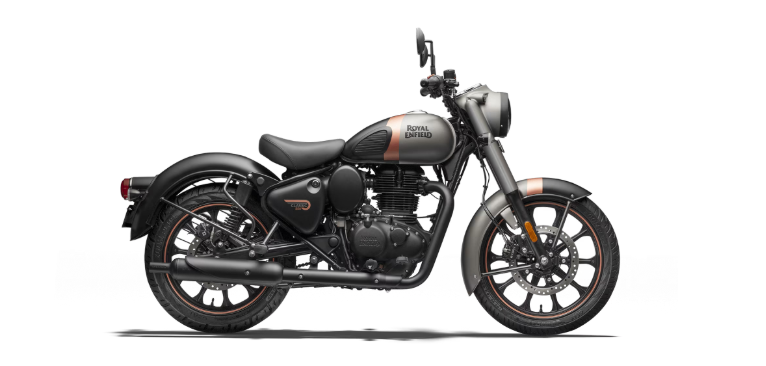
A Hunter 350 buyer may value a smaller principal because the motorcycle serves as a daily commuter. Someone considering a Bullet or Classic 350 may accept a different upfront outlay to obtain the traditional styling and seating they prefer. The Meteor 350 attracts riders interested in cruiser ergonomics, while the 650 twins introduce a substantially different motorcycle and ownership budget.
Higher-cost models can also bring higher insurance premiums, replacement-tyre costs and servicing requirements. Do not treat the difference in EMI as the full difference in ownership expense. Prepare the comparison using the exact variant, dealer quotation and finance terms, rather than an online starting price that excludes additional costs.
Eligibility and paperwork affect the offer
Financing decisions commonly depend on identity and address verification, employment or business income, existing obligations and credit history. A lender may request PAN details, bank statements or income evidence depending on the product and applicant. The requirements for a salaried applicant can differ from those for a self-employed buyer.
A pre-approved advertisement does not guarantee sanction at the headline rate. Read the sanction letter and repayment schedule before making a non-refundable commitment. If two family members are paying together, clarify who is legally responsible for the debt; informal payment arrangements do not automatically change the lender’s contract.
Make room for ownership costs outside the EMI
Your monthly transport budget should include fuel, routine service, parking and insurance provision alongside the instalment. Set aside money for riding boots, a certified helmet and occasional wear items rather than treating these as optional afterthoughts. A motorcycle that is affordable only when nothing goes wrong may strain a modest income.
For longer rides, budget for luggage, a suitable protective jacket and periodic tyre checks. Some cruiser bikes encourage touring, but riding more kilometres increases consumables and fuel use. The sensible test is whether the bike remains affordable during an expensive month, not merely during the first month when excitement is high.
Questions to ask before accepting a loan offer
Ask the lender for the annual interest rate, processing charge, repayment frequency, late-payment policy, preclosure conditions and documentation needed for disbursal. Compare effective costs using the same financed principal and tenure. Confirm whether insurance is compulsory under the contract and whether optional products have been added without your request.
Keep a copy of the signed loan agreement, payment receipts and registration documents. Arrange automatic payment only from an account that regularly maintains enough funds, and monitor the first debit to verify the schedule is correct.
Choose the repayment plan around your finances
Start with the Royal Enfield that suits your journeys, establish a realistic initial contribution and calculate instalments under more than one tenure. A manageable EMI leaves room for ordinary living costs and savings. Choose the financing arrangement only after the total payable, fees and repayment conditions are clear; an attractive monthly figure alone is not enough.