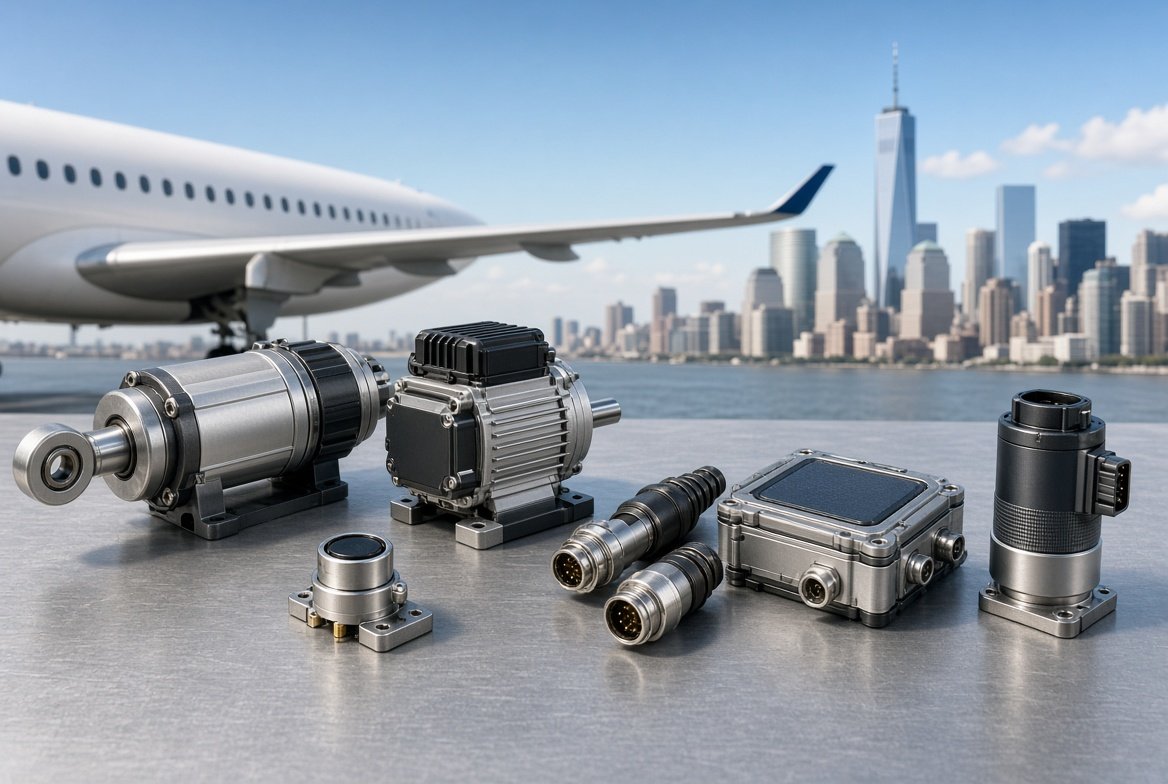
The aviation industry relies heavily on precision-engineered electromechanical components that convert electrical energy into mechanical motion and vice versa, ensuring safe and efficient aircraft operations. In New York, a major hub for aerospace activity due to its proximity to major airports, maintenance facilities, and research institutions, the demand for high-quality electromechanical systems continues to grow.
These components include actuators, motors, sensors, solenoids, relays, and servo systems that control everything from flight surfaces and landing gear to cabin systems and engine controls. Understanding the role of these parts within the regional aviation ecosystem helps operators, maintenance providers, and procurement teams make informed decisions about reliability, compliance, and long-term performance.
Understanding Electromechanical Components in Modern Aircraft
Electromechanical components form the critical interface between an aircraft’s electrical systems and its mechanical functions. Unlike purely electronic devices, these assemblies combine motors, gears, switches, and feedback mechanisms to deliver precise movement under extreme conditions of temperature, vibration, and altitude. Primary flight control actuators adjust ailerons, elevators, and rudders in response to pilot or autopilot inputs.
Secondary systems manage flaps, spoilers, and thrust reversers. Environmental control systems use electromechanical valves and compressors to regulate cabin pressure and temperature. Landing gear extension and retraction, as well as door and cargo systems, also depend on robust electromechanical actuators that must perform flawlessly after long periods of inactivity.
In commercial and general aviation fleets operating through New York’s busy airspace, these components must meet rigorous certification standards. The Federal Aviation Administration requires that every electromechanical part used in certified aircraft undergo design approval, production quality control, and ongoing airworthiness oversight.
Materials must resist corrosion from coastal environments, and designs must accommodate the freeze-thaw cycles common in the northeastern United States. Electromagnetic compatibility is equally important so that signals from navigation and communication equipment remain free of interference generated by motors and solenoids.
The Importance of Regional Supply and Technical Expertise in New York
New York’s concentration of airlines, fixed-base operators, and overhaul shops creates a continuous need for both new and repaired electromechanical assemblies. Proximity to Kennedy, LaGuardia, and Newark airports means that downtime for component replacement or repair translates directly into schedule disruptions and increased operating costs.
Local availability of specialized inventory and technical support therefore becomes a competitive advantage. Engineers and technicians in the region often require components that match original equipment manufacturer specifications while also offering improved service life or reduced weight.
Beyond simple part supply, the ability to provide application engineering support proves valuable. Aircraft operators may need assistance selecting actuators with higher duty cycles for regional jet operations or motors optimized for electric taxi systems under evaluation by several carriers.
Testing laboratories in the greater New York area can verify performance under simulated flight loads, altitude chambers, and thermal cycling, giving operators confidence before installation. Documentation packages that include full traceability, material certifications, and first-article inspection reports remain essential for both commercial and military customers.
Quality Standards and Regulatory Considerations
Every electromechanical component destined for aircraft use must satisfy a complex web of regulatory and industry standards. AS9100 quality management systems, NADCAP accreditation for special processes, and FAA Parts Manufacturer Approval or Technical Standard Order authorization form the baseline expectations.
In New York, where many maintenance organizations hold repair station certificates, the expectation for incoming parts is that they arrive with complete airworthiness tags and complete life-limited part tracking. Counterfeit detection protocols have become more sophisticated, employing microscopic inspection, X-ray analysis, and spectroscopic material verification to protect the supply chain.
Environmental regulations also influence component selection. New York State and federal rules governing hazardous materials affect plating processes, lubricants, and potting compounds used in electromechanical assemblies. Manufacturers increasingly turn to RoHS-compliant and REACH-compliant formulations without sacrificing performance.
Weight reduction initiatives driven by fuel-efficiency targets further encourage the use of advanced composites and rare-earth magnet motors that deliver higher power density. These trends require suppliers to stay current with both technological advances and evolving compliance requirements.
Maintenance, Repair, and Overhaul Considerations
Electromechanical components experience wear from mechanical cycling, electrical arcing, and environmental exposure. Predictive maintenance programs that monitor current draw, vibration signatures, and thermal profiles help operators schedule replacements before failures occur.
In the New York region, several specialized repair facilities focus on the overhaul of actuators and motors, restoring them to zero-time condition under approved data. Repair processes typically include complete disassembly, non-destructive inspection of housings and shafts, replacement of bearings and seals, rewinding of armatures when necessary, and rigorous acceptance testing that replicates flight loads.
The decision between repair and replacement often hinges on cost, turnaround time, and remaining service life. For older aircraft still operating in the region, repair remains economical and environmentally preferable. Newer platforms may favor replacement with upgraded designs that incorporate digital feedback and health-monitoring features. Either path requires careful coordination with engineering and quality departments to ensure the returned component carries the correct documentation for return to service.
Emerging Technologies and Future Directions
The shift toward more-electric aircraft architectures increases the number and criticality of electromechanical systems. Traditional hydraulic actuators are gradually being replaced by electro-hydrostatic and electromechanical alternatives that eliminate fluid leaks and reduce maintenance.
Electric propulsion concepts under development for regional and urban air mobility vehicles will further expand the market for high-power density motors and controllers. New York’s research universities and technology incubators contribute to these advances through materials science and control algorithm research.
Additive manufacturing now enables complex geometries for motor housings and gearboxes that were previously impossible or prohibitively expensive. Embedded sensors provide real-time health data that feed into aircraft health management systems. Cybersecurity considerations have also entered the conversation, as digitally controlled electromechanical components become potential attack surfaces. Suppliers and operators must therefore address both physical reliability and software integrity.
Selecting the Right Partner for Electromechanical Needs
Operators and maintenance organizations in New York benefit from working with suppliers that combine deep inventory of certified components with engineering support and responsive logistics. One such provider is Vantage Components, which focuses on delivering electromechanical solutions tailored to aviation requirements.
Clear communication of technical specifications, lead times, and quality expectations remains essential for successful partnerships. Long-term agreements that include consignment stock, vendor-managed inventory, and proactive obsolescence management help stabilize operations in an industry where unexpected component shortages can ground aircraft.
FAQs
What makes electromechanical components different from pure electronic or pure mechanical parts in aircraft applications?
Electromechanical components uniquely integrate electrical energy conversion with precise mechanical output, enabling controlled motion under flight conditions that neither pure electronics nor passive mechanical systems can achieve alone.
Why is local availability of these components important for New York-based operators?
Rapid access reduces aircraft-on-ground time at the region’s busy airports, minimizes logistical complexity, and allows for quicker engineering consultation when configuration or certification questions arise.
How do operators ensure the authenticity and airworthiness of electromechanical parts?
Through certified distributors that provide full chain-of-custody documentation, manufacturer certifications, and independent verification testing consistent with FAA and industry anti-counterfeit guidelines.
Are repaired electromechanical components as reliable as new ones?
When overhauled by approved repair stations using authorized data and procedures, restored components meet the same airworthiness standards as new parts and often include updated materials that improve longevity.
What role will electromechanical systems play in future aircraft designs?
They will become more central as aircraft move toward greater electrification, supporting flight controls, environmental systems, and eventually distributed electric propulsion while reducing reliance on hydraulic and pneumatic networks.