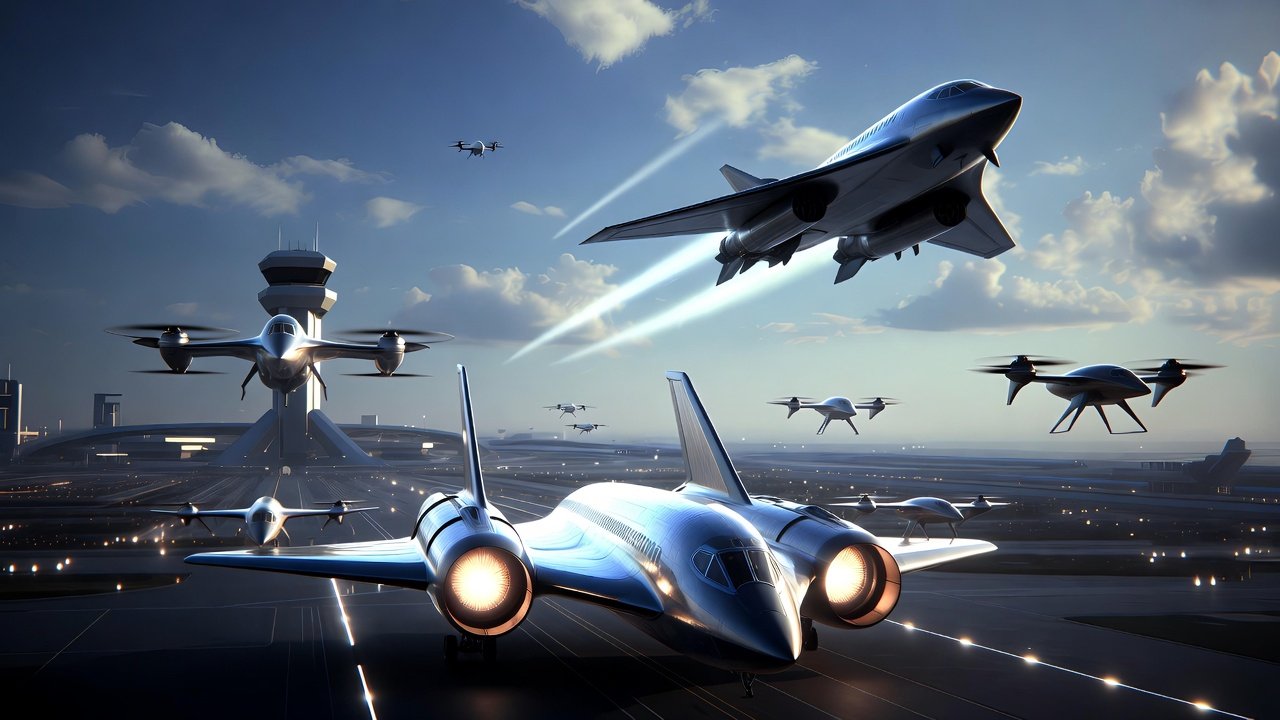
The aircraft and aerospace industry stands as one of the most technologically advanced and economically significant sectors in the world. Encompassing everything from commercial aviation and military defense systems to space exploration and satellite technology, this industry drives innovation across engineering, materials science, electronics, and digital systems. With a global market valued at over $900 billion and projected to grow substantially over the next decade, understanding how the aerospace sector operates, what forces shape it, and where it is headed is essential for investors, professionals, students, and aviation enthusiasts alike.
A Brief History of the Aerospace Industry and Aircraft Manufacturing
The origins of the aerospace industry trace back to the Wright Brothers’ first powered flight in 1903, an event that forever changed the trajectory of human civilization. Within two decades, the world witnessed the birth of commercial aviation, military airpower, and the earliest concepts of aerospace engineering as a formal discipline. The post-World War II era saw explosive growth in aircraft manufacturing as nations invested heavily in jet-powered technology, both for civilian passenger transport and strategic defense. Companies such as Boeing, Lockheed, and Douglas in the United States, alongside British and European manufacturers, laid the foundational framework of what would become a globally interconnected aerospace supply chain. The moon landings of the late 1960s extended the industry’s scope far beyond Earth’s atmosphere, establishing aerospace as a field that fused aeronautics with the emerging science of astronautics. Today, this legacy of bold engineering and fierce competition continues to define the sector’s culture and ambitions.
Commercial Aviation and the Role of Aircraft Manufacturers in the Global Economy
Commercial aviation serves as the backbone of the modern global economy, enabling the rapid movement of passengers and cargo across continents. The major aircraft manufacturers, most notably Boeing and Airbus, dominate this space and together account for virtually all large commercial jetliner production worldwide. These companies not only build aircraft but also manage vast ecosystems of thousands of suppliers, subcontractors, and technology partners spanning dozens of countries. The economics of commercial aircraft manufacturing are uniquely challenging, with program development cycles spanning a decade or more, enormous upfront capital requirements, and intense pressure from airlines to deliver fuel-efficient and reliable platforms. Wide-body jets like the Airbus A350 and Boeing 787 Dreamliner represent the pinnacle of current civil aviation design, incorporating advanced composite materials, next-generation turbofan engines, and sophisticated flight management systems that reduce fuel burn and operating costs. Regional aviation, served by manufacturers like Embraer and Bombardier, complements this market by connecting smaller cities to major hubs, playing a crucial role in regional economic development.
Defense Aerospace: Military Aircraft, Advanced Weapons Systems, and National Security
Defense aerospace represents the other major pillar of the industry, where governments invest billions of dollars annually to develop and maintain air superiority, surveillance capabilities, and strategic deterrence. Military aircraft range from fifth-generation stealth fighters like the F-35 Lightning II to long-range strategic bombers, advanced unmanned aerial vehicles (UAVs), airborne early warning systems, and military transport aircraft. The defense aerospace sector operates on a different model than commercial aviation, with cost-plus contracts, strict security classifications, and procurement cycles deeply tied to national budget processes and geopolitical priorities. Prime contractors such as Lockheed Martin, Northrop Grumman, Raytheon Technologies, and BAE Systems are among the largest and most influential players in this space. The proliferation of drone technology has been one of the most transformative developments in military aerospace over the past two decades, enabling persistent surveillance, precision strike, and logistical support with reduced risk to human operators. Countries around the world are racing to develop next-generation combat drones and autonomous aerial systems that may reshape the character of future warfare.
The Space Segment: Satellites, Launch Vehicles, and the New Space Economy
Beyond Earth’s atmosphere, the aerospace industry extends into the rapidly growing space sector, which has undergone a dramatic transformation since the emergence of private spaceflight companies. Traditionally the domain of government agencies like NASA, ESA, and Roscosmos, space access has been democratized in recent years by companies such as SpaceX, Blue Origin, Rocket Lab, and a growing constellation of launch startups. SpaceX’s development of reusable rocket technology fundamentally changed the economics of space access, reducing launch costs by orders of magnitude and enabling a surge of commercial satellite deployments. The satellite industry itself has expanded enormously, with low Earth orbit (LEO) mega-constellations providing global broadband internet, Earth observation data, weather forecasting, and precision navigation services. Space exploration programs targeting the Moon and Mars are increasingly driven by a mix of government ambition and private enterprise, creating new markets for spacecraft, life support systems, in-situ resource utilization technology, and crew transportation services. The space economy is projected to reach trillions of dollars in value within the coming decades, making it one of the most consequential long-term growth frontiers in the entire aerospace landscape.
Emerging Technologies Transforming the Aerospace Industry
Sustainable Aviation Fuels and Green Propulsion Systems
One of the most pressing challenges facing the aerospace industry today is decarbonization. Aviation currently accounts for approximately 2 to 3 percent of global carbon dioxide emissions, a figure that rises significantly when the full climate impact of high-altitude contrails and non-CO2 effects are factored in. Sustainable Aviation Fuels (SAF), produced from biomass, municipal waste, and synthetic processes using renewable electricity, offer a pathway to dramatically reduce aviation’s carbon footprint without requiring changes to existing aircraft or infrastructure. Major airlines and aircraft manufacturers have committed to ambitious SAF adoption targets, and regulatory bodies in Europe, the United States, and elsewhere are implementing blending mandates and incentives to accelerate market development. In parallel, the industry is exploring hydrogen propulsion, battery-electric systems for short-haul regional aircraft, and hybrid-electric architectures that combine conventional turbines with electric motors. These green propulsion technologies represent a fundamental shift in aerospace engineering and will likely define the next generation of civil aircraft design.
FAQs
What is the difference between the aviation industry and the aerospace industry?
Aviation refers specifically to the design, development, operation, and use of aircraft that fly within Earth’s atmosphere, including commercial airlines, private aircraft, and military jets.
Which countries dominate the global aerospace industry?
The United States has historically dominated the global aerospace industry, home to companies such as Boeing, Lockheed Martin, SpaceX, Raytheon Technologies, and General Dynamics. Europe is a major force through Airbus, Safran, Rolls-Royce, and the collective industrial capacity of France, Germany, the UK, and Spain working through pan-European frameworks.
What qualifications do I need to work in the aerospace industry?
Most engineering and technical roles in the aerospace industry require at minimum a bachelor’s degree in aerospace engineering, mechanical engineering, electrical engineering, computer science, or a related discipline. Many senior research and design positions prefer candidates with master’s or doctoral qualifications.
What is the future outlook for the aerospace industry?
The long-term outlook for the aerospace industry is strongly positive, underpinned by rising global demand for air travel, growing government and private investment in space exploration, the emergence of urban air mobility and advanced air taxis, increasing defense budgets worldwide, and a pipeline of transformative technologies in propulsion, materials, and digital systems.