I remember the first time someone showed me they could unlock their front door from a phone. It felt like a party trick. That was maybe six years ago. Now the same person controls their entire house that way — lights, thermostat, cameras, everything — and doesn’t think twice about it.
That’s kind of the story of smart home apps in a nutshell. What started as a novelty quietly became infrastructure.
So What Exactly Is a Smart Home App?
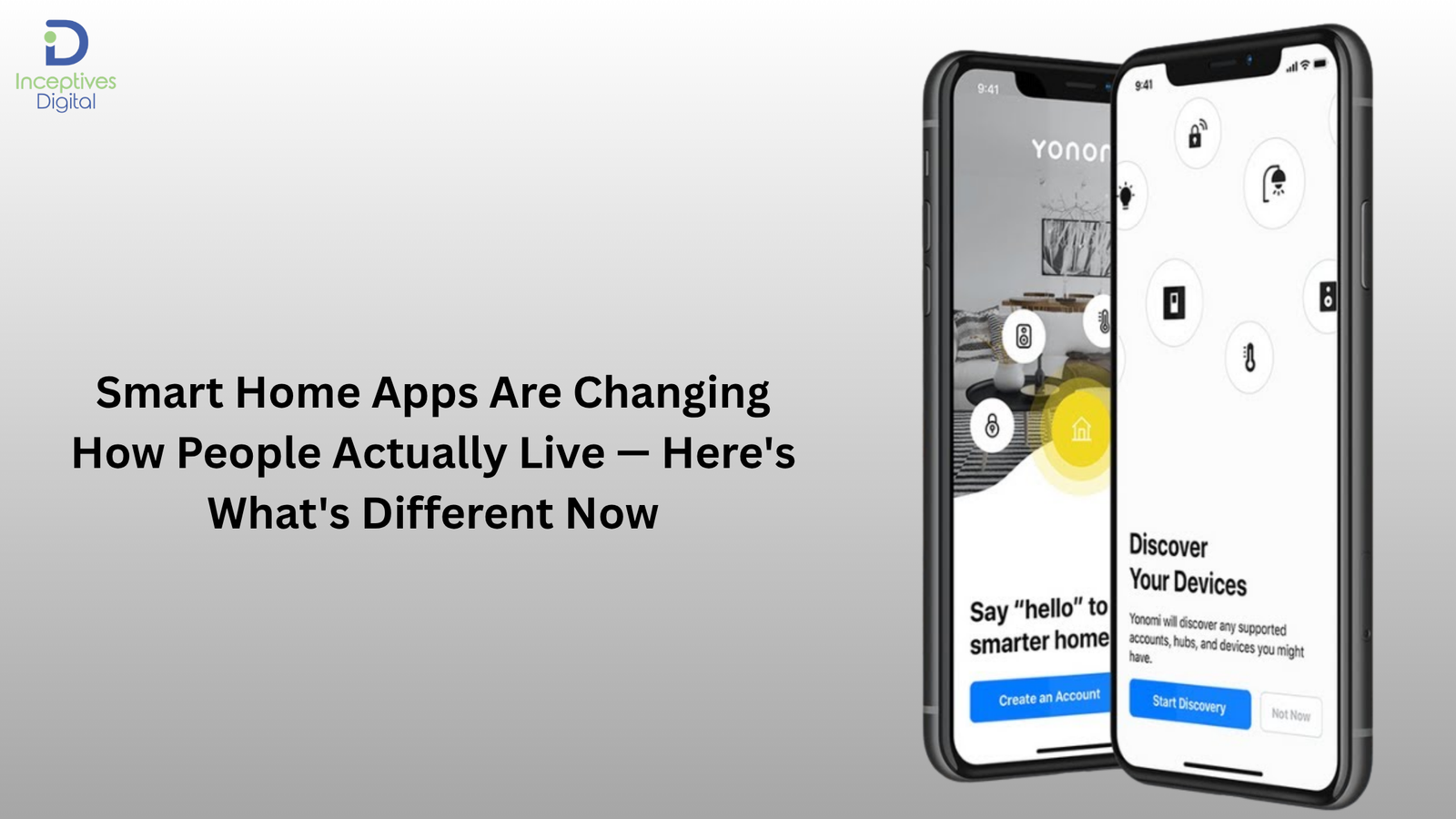
The application functions as an interface that users can access through their mobile devices, tablets, or web browsers to manage their home automation system. The devices communicate with each other through a network known as the Internet of Things, which people commonly refer to as Io. Your phone serves as the control device for all the electronic systems in your home.
We’re talking about things like:
- Lights you can dim or switch off from anywhere
- Thermostats that learn your schedule
- Door locks you control remotely
- Security cameras with live feeds
- Appliances you can start or stop on the go
- Voice assistants tied into all of the above
The idea is one app, one interface, full control. No running around checking switches before bed.
Many homeowners today are working with a mobile app development company in USA to build something that fits their home and lifestyle specifically — not a generic product, but something designed around how they actually live.
How Did We Get Here?
Well, there never was any occasion when some sagacious assembly of experts sat around to assign a year as the great turning point; even before anyone realized it, the concurrent arrival of various ingredients kindled magic.
Almost every person now possesses a smartphone as their primary mobile device. The internet now provides fast and reliable connections which enable continuous device communication. The smart home system components, which include smart bulbs, locks, and cameras, became affordable enough that people could buy multiple devices without financial concern. The demands of my everyday life increased in intensity, which made me see automatic task management systems as essential resources.
People who worked from home for multiple years created changes in society. When your house is your office, your gym, your kids’ school, and your restaurant, you start caring about your home system functionality.
What’s Actually Different in Daily Life
You Stop Worrying About Small Things
The mental overhead of small tasks is surprisingly heavy. Did I lock the door? Did I leave a light on? Is the heating running while nobody’s home?
Smart home apps eliminate most of that. You check, you fix it, you move on. Some people say that alone is worth the setup.
Home Security Feels Different
This has probably been the biggest shift for most people. Security used to mean an alarm that went off if someone broke in. Now it means:
- Live camera feeds you can pull up from anywhere
- Motion alerts sent directly to your phone
- Smart locks with temporary access codes for guests or deliveries
- Systems that recognize what normal activity looks like and flag anything unusual
For anyone living alone, traveling frequently, or looking after an elderly family member, this kind of visibility changes things in a real way.
Energy Bills Actually Go Down
This one surprises people. Smart home technology is often marketed around convenience, but the energy savings are real and measurable.
Lights that turn off when a room is empty. A thermostat that stops heating the house two hours before you get home and starts thirty minutes again before you arrive. Detailed breakdowns showing exactly which devices are consuming the most power.
Over a year, the savings add up. It’s one of those rare situations where the easier option is also the cheaper one.
Routines Run Themselves
The automations that feel most useful are the quiet ones you stop noticing. Lights that gradually brighten when your alarm goes off. The front door locks itself at night. The air conditioning kicks in before the afternoon heat peaks.
You set them up once, and then they just happen. That’s the point.
A Real Difference for People Who Need It
This doesn’t get talked about enough. For elderly individuals or people living with physical limitations, smart home apps aren’t just convenient — they’re meaningful.
Voice-controlled lighting means not needing to reach a switch. Automated locks mean not struggling with keys. Remote monitoring means family members can check in without being intrusive. Independence in your own home is something worth designing for, and the best smart home apps take this seriously.
What Makes These Apps Work
Behind the scenes, a few technologies carry the weight:
The Internet of Things establishes connections between physical devices to enable data transmission and reception. It uses artificial intelligence together with machine learning to identify user patterns, like their preferences and their daily routines. Remote access through cloud infrastructure becomes available to users who have any location that provides internet connectivity. Voice recognition technology enables users to control virtual assistants through devices such as Alexa and Google Home without using their hands. The smoothness of the connection depends upon how well these are integrated with each other.
The Honest Drawbacks
Worth being upfront about these.
Security vulnerabilities are real. A connected home has more entry points than a traditional one, and not every manufacturer invests equally in protecting them. Look for apps that offer strong encryption and regular updates.
Compatibility between devices is still messier than it should be. The industry is fragmented. Some devices speak different protocols and don’t cooperate without workarounds.
Upfront costs can be significant if you’re outfitting an entire home at once. Most people find it easier to start with one or two areas and expand.
And if your internet goes down, parts of your system may go with it. That’s a dependency worth planning around.
Where Things Are Heading
AI is going to make these systems considerably more predictive. Instead of automating what you’ve told it to do, your home will start anticipating what you need based on patterns it observes — weather, your calendar, time of day, and who’s home.
Wearable devices will likely integrate with home systems to provide health and activity information. The energy management systems will develop advanced capabilities. The industry now progresses toward unified standards, which helps to solve the issue of different brand devices failing to operate together.
The homes people live in five years from now will look at today’s setups the way we look at early smartphones. Functional, but clearly a first draft.
For Businesses, This Is Also Worth Paying Attention To
Smart systems aren’t just for houses. Commercial buildings, offices, and facilities are adopting the same technology for energy management, security, and remote operations. For developers and tech companies, this is a market with real room to grow — but only for products that solve genuine problems rather than just adding features.
If You’re Building One, A Few Things Matter Most
Keep the interface simple. The technology underneath can be complex. What the user sees and touches shouldn’t be.
Security needs to be foundational, not an add-on. It’s far harder to retrofit than to build in from the start.
Support as many devices as reasonably possible. Compatibility is a competitive advantage.
Design for where things are going, not just where they are. IoT evolves fast. Apps that can grow without breaking are the ones that last.
Understanding the realistic mobile app development cost — including ongoing maintenance, security infrastructure, and updates — is essential before committing to a product in this space.
Final Thought
Smart home apps are doing something that good technology always does — they’re making a part of life easier without asking you to think much about how.
The market is still growing, the technology is still improving, and the gap between “early adopter” and “everyday household” keeps narrowing. Whether you’re a homeowner looking to simplify things or a business looking to build in this space, the window to get ahead of this curve is still open.
It just won’t be forever.