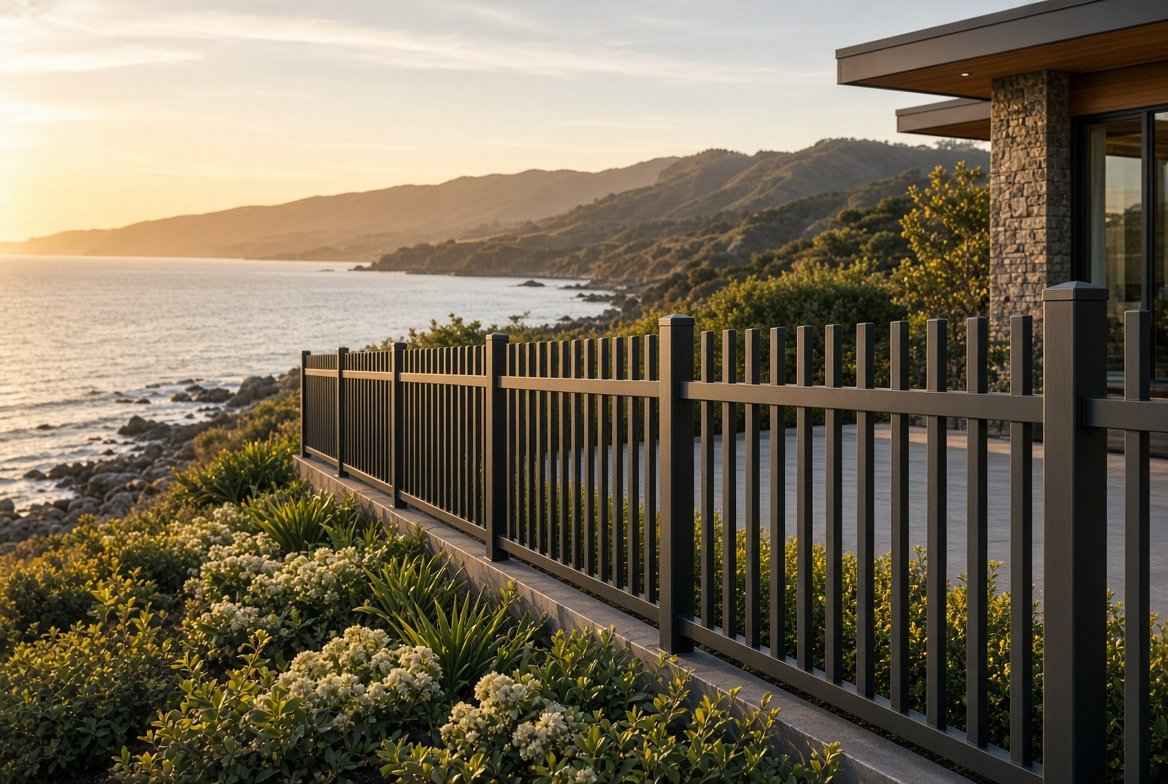
Aluminum fencing has become a preferred choice for homeowners and property managers across the San Francisco Bay Area, where coastal weather, seismic activity, and diverse architectural styles demand materials that combine durability with refined appearance. Unlike traditional wood or iron options, aluminum offers resistance to corrosion from salt air, requires minimal upkeep, and adapts well to both modern and classic home designs common from San Jose to Marin County. Choosing aluminum for perimeter security, privacy, or decorative boundaries supports long-term property value while addressing the region’s unique environmental challenges.
Benefits of Aluminum Fencing for Coastal and Urban Properties
Aluminum fences deliver several practical advantages that align with Bay Area living conditions. The material is naturally resistant to rust, even when exposed to marine air along the shoreline or fog-prone inland zones. Its lightweight nature simplifies handling during installation and reduces structural load on posts and gates, an important consideration in areas subject to occasional ground movement.
Powder-coated finishes available in a range of colors help aluminum blend with contemporary exteriors or traditional Victorian and Craftsman homes found throughout the region. Because aluminum does not warp, crack, or require regular staining, property owners avoid the recurring labor and expense associated with wood fences that deteriorate under wet winters and dry summers. In addition, many aluminum systems incorporate decorative elements such as spear tops, horizontal rails, or privacy panels that satisfy both aesthetic preferences and local height or style guidelines often enforced by homeowner associations.
Why Aluminum Suits Bay Area Climate and Regulations
The Bay Area’s microclimates range from cool, moist coastal strips to warmer inland valleys, creating conditions that accelerate corrosion in ferrous metals and promote decay in organic materials. Aluminum’s protective oxide layer forms naturally and remains stable under these fluctuating temperatures and humidity levels. Seismic codes in California emphasize flexible yet secure installations; aluminum’s ductility allows fence sections to absorb minor ground shifts without permanent deformation.
Municipalities and planned communities frequently impose restrictions on fence height, opacity, and materials near public rights-of-way or scenic corridors. Prefabricated aluminum panels and modular systems can be configured to meet these rules while still providing the required level of security or visual screening. Homeowners in hillside neighborhoods also benefit from aluminum’s ability to follow uneven terrain with adjustable brackets, reducing the need for extensive grading that might trigger additional permitting.
The Installation Process for Residential and Commercial Sites
Proper aluminum fence installation begins with a detailed site evaluation that maps property lines, identifies underground utilities, and notes slope variations. Accurate layout ensures posts are set at consistent intervals and depths sufficient for local soil conditions, whether clay-heavy or sandy coastal ground. Concrete footings provide stability, and posts are typically anchored to resist wind loads common along open waterfronts or elevated ridges.
Once posts are cured, horizontal rails and vertical pickets or panels are secured using stainless-steel fasteners that prevent galvanic reactions. Gates require careful alignment so that hinges and latches operate smoothly over years of use; self-closing mechanisms and keyed locks can be added for enhanced security.
Throughout the process, attention to expansion gaps accounts for temperature changes that cause slight dimensional shifts in metal. Experienced crews complete most residential projects within a few days, minimizing disruption to landscaping and daily routines. Final inspection confirms that the completed fence meets manufacturer specifications and any applicable local ordinances.
Factors to Consider Before Beginning Installation
Prospective buyers should evaluate several variables unique to their location and needs. Soil composition affects footing design; expansive clay soils common in parts of the East Bay may require deeper or wider concrete bases. Proximity to the ocean or bay increases exposure to salt spray, making high-quality powder coating and sealed joints essential for long-term appearance.
Desired privacy levels influence panel style—open picket designs maintain views and airflow preferred in warmer inland areas, while solid or semi-solid panels offer greater screening near busy streets. Budget considerations include not only material and labor but also potential permit fees, which vary by city and county.
Coordination with utility locating services prevents costly delays, and reviewing HOA architectural guidelines early avoids redesigns after materials arrive. Thinking through these elements produces a fence that performs reliably and complements the surrounding environment.
Maintenance Requirements and Expected Longevity
One of aluminum fencing’s strongest selling points is its low maintenance profile. Routine care typically involves occasional washing with mild soap and water to remove dust, pollen, or salt residue. Unlike wood, aluminum never needs sealing, painting, or replacement of individual boards. High-quality powder coatings resist fading and chalking for decades under Bay Area sun exposure.
Hardware such as hinges and latches may benefit from periodic lubrication, especially in foggy or rainy microclimates. When properly installed and finished, an aluminum fence can remain structurally sound and visually appealing for twenty-five years or longer, outlasting many competing materials under comparable conditions. This longevity reduces lifetime ownership costs and supports sustainable property management practices.
Cost Considerations and Value Over Time
Initial investment for aluminum fencing often falls between mid-range wood and premium ornamental iron, with final price influenced by linear footage, terrain complexity, gate quantity, and finish selection. Custom designs or specialized privacy features increase material expense, while straightforward rectangular lots with level grade keep labor costs lower.
Although upfront figures may exceed those of pressure-treated lumber, the absence of annual staining, repair, or premature replacement makes aluminum more economical across a ten- to twenty-year horizon. Energy efficiency can also improve when fences support windbreaks or define outdoor living spaces that encourage year-round use of patios and gardens. Property owners frequently recover a portion of the installation cost through increased curb appeal and marketability when selling homes in competitive Bay Area neighborhoods.
Selecting Styles That Complement Local Architecture
Bay Area homes display wide stylistic variety, from glass-walled contemporary residences in Silicon Valley to historic structures in San Francisco and the Peninsula. Aluminum fencing systems accommodate this diversity through multiple profile options. Slim vertical pickets evoke traditional ironwork without the maintenance burden, while horizontal rail designs echo mid-century modern aesthetics popular in many newer developments.
Color choices ranging from matte black and bronze to lighter neutrals allow coordination with existing trim, roofing, or hardscape elements. For properties requiring both security and openness, combination panels with solid lower sections and open upper sections balance privacy and sightlines. Matching the fence style to the home’s architectural language creates visual continuity that enhances overall property presentation.
Professional Installation Services in the Region
Homeowners seeking reliable results often turn to established local providers familiar with Bay Area permitting processes, soil conditions, and design preferences. Morgan’s Fence & Awning brings specialized experience in aluminum systems tailored to the region’s demands, ensuring installations meet both functional and aesthetic expectations.
FAQs
How long does a typical aluminum fence installation take in the Bay Area?
Most residential projects spanning one hundred to two hundred linear feet can be completed in two to four working days once permits are secured and materials arrive, though complex slopes or multi-gate configurations may extend the timeline slightly.
Does aluminum fencing require special treatment near the coast?
High-quality powder-coated aluminum performs well in marine environments when joints are properly sealed and hardware is corrosion-resistant; regular rinsing after heavy fog or salt-laden winds helps preserve the finish.
Are permits always necessary for fence installation?
Requirements vary by city and county; many jurisdictions mandate permits for fences exceeding certain heights or located near public rights-of-way, so checking local building departments early prevents delays.
Can aluminum fences be installed on uneven terrain?
Yes, modular systems and adjustable brackets allow installers to follow natural grade changes common on Bay Area hillsides without extensive earthmoving.
What is the expected lifespan of a properly installed aluminum fence?
With quality materials and correct installation, aluminum fencing commonly lasts twenty-five years or more under regional weather conditions while retaining structural integrity and appearance.