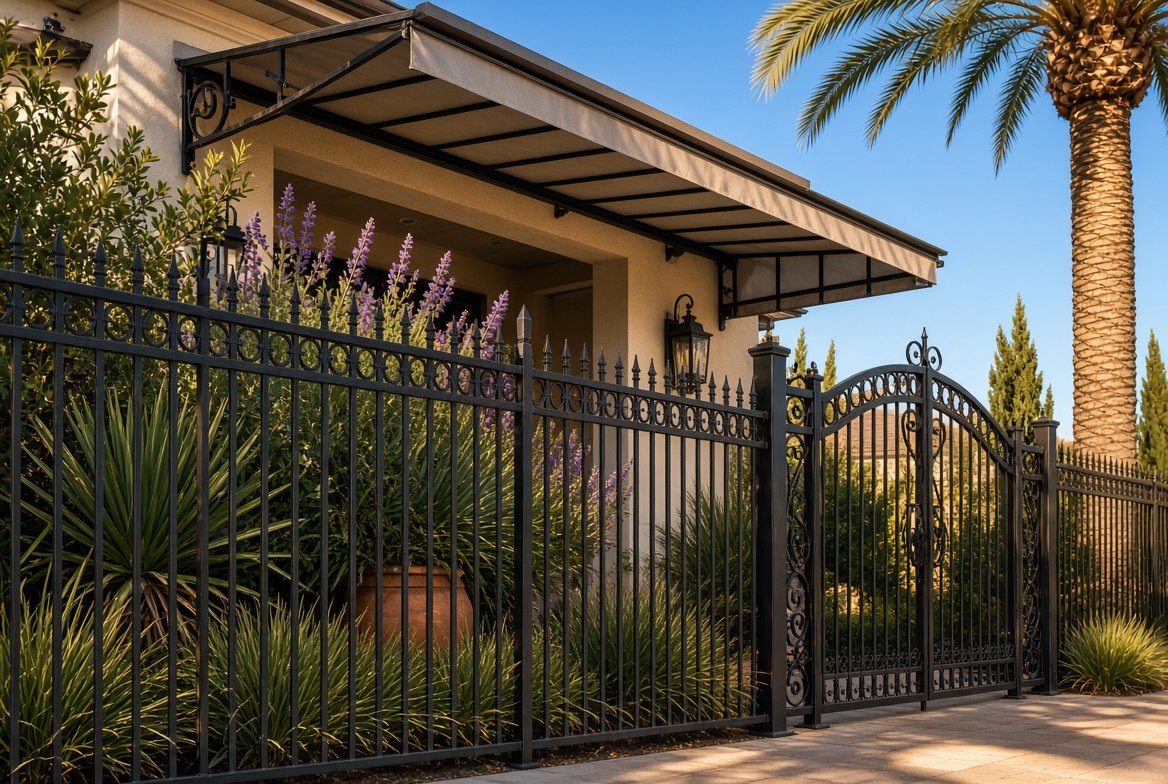
California homeowners and property managers face unique challenges when selecting outdoor structures that combine security, privacy, and weather protection. Iron fence awnings address these needs by pairing the strength of wrought or tubular iron fencing with functional overhead coverage that shields against intense sun, coastal moisture, and occasional heavy rain.
Across the state, from the dry inland valleys to the foggy northern coast and the sunny southern suburbs, these installations have become a practical choice for residences, commercial properties, and community spaces seeking long-lasting outdoor enhancements.
Benefits of Iron Fence Awnings Across California Climates
The Mediterranean and semi-arid climates that dominate much of California place heavy demands on outdoor materials. Prolonged exposure to ultraviolet radiation, temperature swings between daytime heat and cooler nights, and salt air near the Pacific can degrade lesser metals and fabrics quickly. Iron fence awnings excel here because properly finished iron resists warping and maintains structural integrity far longer than wood or lightweight aluminum alternatives in many applications.
The fence component delivers perimeter security and a refined architectural presence, while the awning portion creates usable shaded zones for patios, entryways, or parking areas. This dual functionality reduces indoor cooling loads during peak summer months and protects outdoor furnishings from direct sunlight. In regions prone to Santa Ana winds or coastal breezes, the rigidity of iron framing helps the overall system remain stable when fabric or metal canopy panels are correctly tensioned and anchored.
Selecting Materials and Designs Suited to Local Conditions
Successful iron fence awnings begin with thoughtful material selection. Powder-coated or galvanized iron provides a robust base that withstands California’s varied weather patterns. Darker finishes absorb heat yet remain popular for their classic appearance against Mediterranean-style homes and modern architecture alike. Lighter colors or specialized coatings can minimize surface temperatures in the hottest inland areas.
For the awning section, options range from traditional fabric canopies stretched over iron supports to solid metal panels that offer year-round protection. Retractable systems allow adjustment according to seasonal sun angles, while fixed structures deliver consistent coverage.
Local building codes and homeowners association guidelines frequently influence height, setback, and aesthetic requirements, making early research essential. Properties near wildfire-prone zones may also need to consider ember-resistant details and defensible-space clearances when planning fence lines and overhead elements.
Integrating Iron Fence Awnings with California Landscapes and Architecture
California’s diverse architectural heritage—from Spanish Colonial Revival and Craftsman bungalows to contemporary glass-and-steel residences—pairs naturally with iron elements. Ornate scrollwork and spear-point finials complement historic neighborhoods in places such as Pasadena or San Francisco, while clean geometric lines suit modern developments in Orange County or the Silicon Valley.
When an awning is incorporated, the design must balance visual weight so the overhead structure does not overpower the fence or the building facade. Proper proportioning ensures the installation enhances curb appeal rather than appearing as an afterthought. Landscaping further softens the metal lines; drought-tolerant plantings native to the region can be trained along lower fence sections or placed strategically to create layered privacy without blocking the functional benefits of the awning. In multi-family or commercial settings, consistent styling across multiple units or storefronts strengthens brand identity and property value.
Installation Considerations Specific to California Properties
Soil composition varies dramatically across the state, from expansive clay in the Central Valley to sandy coastal soils and rocky foothill terrain. Secure footings and proper drainage around fence posts and awning supports prevent shifting that could compromise the structure over time. Seismic considerations also factor into engineering, as California’s building standards require systems capable of handling lateral movement.
Professional installers evaluate site-specific conditions, including existing utilities, slope, and prevailing wind patterns, before finalizing layouts. Permit processes differ by municipality, and many jurisdictions require engineered drawings for structures that exceed certain heights or attach to buildings.
Coordinating these steps early avoids delays and ensures the finished iron fence awning meets both safety codes and homeowner expectations. For properties seeking reliable craftsmanship in this specialized combination of fencing and shade structures, Morgan’s Fence & Awning delivers experienced service tailored to California conditions.
Maintenance Practices That Extend Service Life
Routine care keeps iron fence awnings performing well for decades. Periodic inspection of coatings identifies chips or abrasion before rust can establish itself, particularly in coastal environments where salt accelerates corrosion. Gentle washing removes accumulated dust, pollen, and urban pollutants that can degrade finishes.
Moving parts on retractable awnings benefit from lubrication according to manufacturer recommendations, while fabric components may require cleaning or eventual replacement depending on ultraviolet exposure levels.
In areas with freeze-thaw cycles at higher elevations, checking for water intrusion into posts or joints prevents internal damage. A proactive maintenance schedule not only preserves appearance but also protects the investment by reducing the likelihood of costly repairs.
Long-Term Value and Sustainability Aspects
Beyond immediate functional benefits, iron fence awnings contribute to property value through improved outdoor living space and enhanced security. Energy savings from reduced solar heat gain can be measurable in hotter climate zones. From a sustainability perspective, iron is highly recyclable, and durable installations minimize the need for frequent replacement compared with shorter-lived materials.
When paired with water-wise landscaping and energy-efficient outdoor lighting, these structures support broader goals of resource conservation common across California communities. Homeowners who plan for longevity—selecting quality coatings, appropriate designs, and professional installation—enjoy systems that age gracefully while continuing to meet evolving lifestyle needs.