Vinyl fencing has become an increasingly popular choice for homeowners across the San Francisco Bay Area, offering a blend of aesthetic appeal, practical durability, and low maintenance that aligns well with the region’s diverse weather patterns and lifestyle demands. From the foggy coasts of San Francisco to the sunnier inland communities of the East Bay and South Bay, residents seek fencing solutions that can withstand coastal moisture, occasional heavy rains, and temperature fluctuations while enhancing property value and privacy.
Vinyl fencing stands out in this context because it resists rotting, warping, and insect damage far better than traditional wood options, making it a smart long-term investment for properties ranging from urban townhomes to spacious suburban lots. Its clean, contemporary appearance also complements the architectural styles commonly found throughout the Bay Area, whether modern minimalist homes or classic California bungalows.
Benefits of Vinyl Fencing for Bay Area Properties
One of the primary advantages of vinyl fencing in the Bay Area is its exceptional resistance to the region’s variable climate. Coastal areas experience persistent moisture and salt air that can quickly degrade wood fences, leading to costly repairs and replacements. Vinyl, by contrast, is engineered to repel water and resist corrosion, maintaining its structural integrity and appearance for decades with minimal intervention.
Homeowners appreciate that vinyl does not require annual staining, sealing, or painting, which is particularly valuable in a region where outdoor maintenance time is often limited by busy schedules and mild but unpredictable weather. Beyond weather resistance, vinyl fencing provides reliable privacy and security. Solid panel styles create effective barriers against street noise and neighboring views, an important consideration in densely populated neighborhoods from Oakland to San Jose.
At the same time, open or semi-private designs allow for airflow and partial visibility, helping properties feel less enclosed while still defining boundaries clearly. The material’s smooth surface also discourages graffiti and is easy to clean, contributing to a consistently polished look that supports curb appeal in competitive real estate markets.
Why Vinyl Fencing Performs Well in Bay Area Conditions
The Bay Area’s microclimates present unique challenges that vinyl fencing handles effectively. In foggy zones near the Golden Gate, constant dampness can foster mold and mildew on organic materials, yet vinyl remains unaffected and can simply be rinsed clean. Inland areas such as the Tri-Valley experience hotter summers, and vinyl’s color-stable formulations resist fading under intense sunlight better than many painted surfaces.
Seismic considerations, while more relevant to foundations than fences, still influence material choices; vinyl’s flexibility allows it to absorb minor ground movements without cracking in the way rigid alternatives sometimes do. Additionally, vinyl fencing supports sustainable living goals common among Bay Area residents.
Many modern vinyl products incorporate recycled content and are themselves recyclable at the end of their long service life, reducing the environmental footprint compared to repeatedly replacing wood fences. Local building codes and homeowner association guidelines frequently favor low-maintenance materials that maintain neighborhood aesthetics, and vinyl meets these expectations while offering a wide range of heights, styles, and colors that blend with existing landscapes.
Popular Styles and Design Options for Vinyl Fences
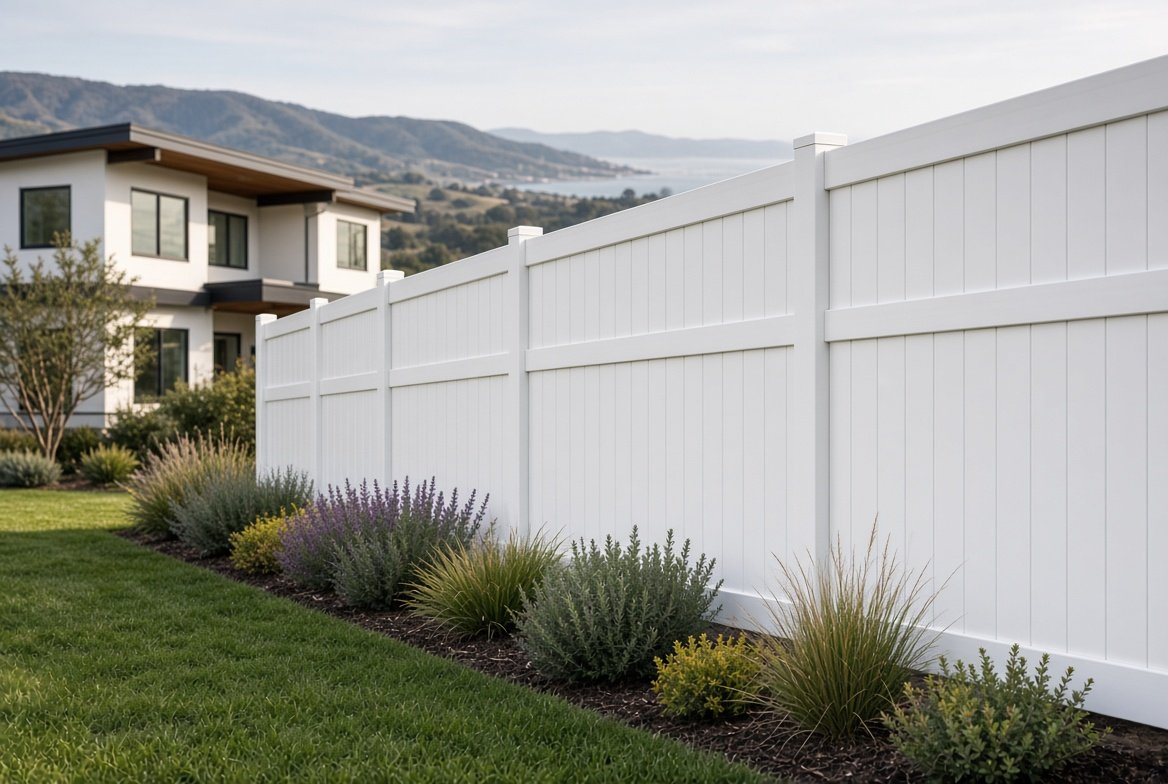
Homeowners exploring vinyl fencing in the Bay Area can choose from an extensive selection of styles tailored to different functional and visual needs. Privacy fences featuring solid panels or tongue-and-groove designs create complete visual barriers, ideal for backyard retreats or pools where seclusion is desired. Semi-privacy options incorporate lattice tops or spaced boards that allow light and air to pass through while still screening most views, striking a balance suitable for side yards or front property lines.
Picket styles evoke a classic cottage feel and work especially well in residential neighborhoods where softer boundary definition is preferred. Ranch or rail designs offer open sightlines that preserve views of hills or water while still marking property edges, a practical choice for larger lots in areas like Marin or the Peninsula.
Color selections typically include classic white, soft grays, and earth tones that coordinate with Bay Area exterior palettes, and many systems allow for matching gates that maintain consistent appearance and security. Decorative elements such as post caps, lattice accents, and custom heights further personalize the installation, enabling homeowners to achieve a finished look that enhances rather than competes with the surrounding architecture and landscaping.
Installation Considerations Across the Bay Area
Proper installation is essential to realizing the full benefits of vinyl fencing in this region. Soil conditions vary widely, from sandy coastal ground to clay-heavy inland soils, and experienced installers account for these differences when setting posts to ensure long-term stability. Local permitting requirements differ by city and county, with some jurisdictions emphasizing setbacks, height limits, and visibility at intersections for safety.
Homeowners should also consider underground utilities, which are common in established neighborhoods, and plan installations carefully to avoid disruptions. In areas prone to strong winds, such as elevated properties or those near open water, reinforced post systems and appropriate panel configurations help maintain structural performance.
Timing of installation can take advantage of the region’s mild winters, allowing year-round progress with fewer weather delays than in harsher climates. When selecting a provider, attention to quality materials, precise measurements, and professional craftsmanship ensures the fence performs as intended for decades.
Maintenance Requirements and Expected Longevity
Vinyl fencing requires remarkably little ongoing care compared with wood or other materials commonly used in the Bay Area. Periodic washing with mild soap and water removes dust, pollen, and coastal residue, restoring the original finish without harsh chemicals. Unlike wood, there is no need for regular sealing or painting cycles that consume time and resources.
The material’s resistance to insects eliminates concerns about termite damage, a periodic issue in some warmer microclimates. With proper installation, a quality vinyl fence can last twenty-five years or more while retaining its appearance and function, providing strong value over time. Occasional inspections of gates and hardware keep moving parts operating smoothly, and most manufacturers offer warranties that cover fading, cracking, and structural integrity under normal conditions.
Cost Factors and Long-Term Value
Initial investment in vinyl fencing typically exceeds that of basic wood options, yet the total cost of ownership often proves lower because of reduced maintenance and replacement needs. Factors influencing price include fence height, style complexity, terrain challenges, and gate configurations. In the Bay Area, labor rates and material availability also play roles, as do site-specific requirements such as rocky soil or steep grades.
Homeowners who prioritize durability and aesthetics frequently find that the upfront cost is offset by years of reliable performance and enhanced property appeal. When evaluating options, comparing lifetime expenses rather than purchase price alone reveals vinyl’s economic advantages, particularly for properties where outdoor spaces are heavily used and visual consistency matters.
FAQs
How long does vinyl fencing typically last in Bay Area weather conditions?
High-quality vinyl fencing installed correctly can remain functional and attractive for twenty-five years or longer, thanks to its resistance to moisture, ultraviolet exposure, and temperature swings common throughout the region.
Does vinyl fencing require special preparation for coastal or foggy environments?
Standard vinyl formulations already perform well against salt air and persistent dampness; choosing products with proven UV inhibitors and ensuring solid post anchoring further enhance resilience without extensive additional treatments.
Can vinyl fences be customized to match specific architectural styles found in the Bay Area?
Yes, a wide range of panel designs, heights, colors, and decorative accents allows vinyl fencing to complement everything from contemporary glass-and-steel homes to traditional Craftsman residences.
Is vinyl fencing compliant with most local building codes and HOA guidelines?
Vinyl is generally accepted when installed according to height, setback, and material standards set by individual cities, counties, and associations; professional installers familiar with local rules help ensure compliance.
What is involved in maintaining a vinyl fence over time?
Maintenance primarily consists of occasional cleaning with soap and water and checking gates or hardware for smooth operation; no painting, staining, or sealing is required.