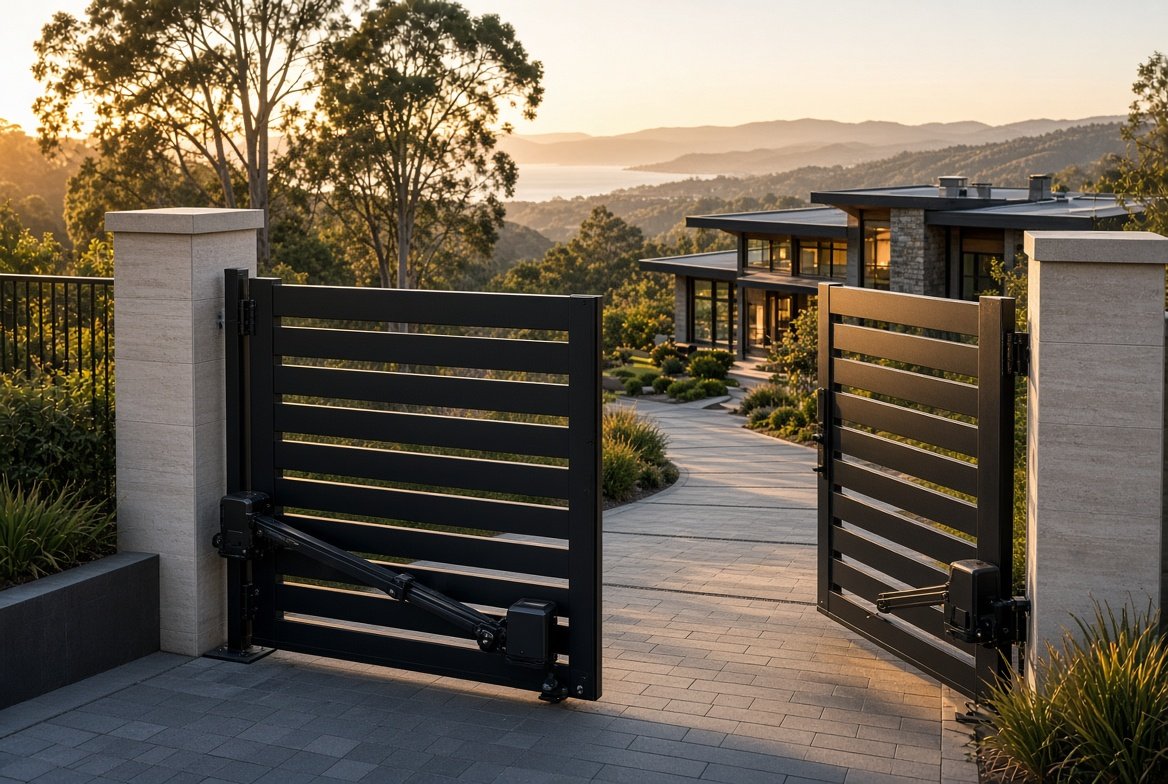
Motorized swinging gates have become an increasingly popular choice for residential and commercial properties across the Bay Area, offering a seamless blend of convenience, security, and aesthetic appeal. These automated systems allow property owners to open and close their entrance gates with the simple press of a button, a remote control, or even smartphone integration, eliminating the need to exit the vehicle or struggle with heavy manual operation.
In a region known for its diverse neighborhoods, from the hills of Oakland and Berkeley to the suburban expanses of San Jose and the coastal communities of Marin County, motorized swinging gates address the practical demands of modern living while enhancing curb appeal and property value. The mild yet variable climate of Northern California, combined with the desire for privacy and controlled access, makes these gates particularly well-suited to local conditions.
Understanding Motorized Swinging Gates and Their Operation
A motorized swinging gate operates on a hinged system, swinging open in an arc much like a traditional door. The automation comes from an electric or hydraulic operator mounted on the gate post or underground, connected to the gate leaf through arms or direct drive mechanisms. When activated, the motor engages to pivot the gate smoothly inward or outward, depending on the design and available space.
Dual swinging gates are common for wider driveways, with both leaves operating in synchronized motion, while single gates suit narrower entrances. Power sources typically rely on standard electrical connections, though solar-powered options have gained traction in areas with reliable sunlight exposure.
Safety features form a critical part of any modern system, including infrared sensors that detect obstacles, automatic reverse mechanisms if contact is made, and battery backup units that ensure operation during power outages common during winter storms or utility maintenance. The technology has advanced significantly, incorporating soft-start and soft-stop functions that reduce mechanical stress and create quieter operation, an important consideration in densely populated Bay Area neighborhoods where noise regulations and neighborly consideration matter.
Benefits of Choosing Motorized Swinging Gates for Local Properties
Property owners throughout the Bay Area find numerous advantages in upgrading to motorized swinging gates. The primary benefit centers on convenience, especially for households with multiple vehicles or those navigating steep or winding driveways typical of hillside communities. Drivers no longer need to leave their cars in potentially unsafe or rainy conditions to open a gate, a feature particularly valued during the region’s wet winters.
Enhanced security represents another major advantage, as automated systems can integrate with access control technologies such as keypads, intercoms, vehicle detectors, and smartphone apps that allow remote monitoring and operation. This level of control helps deter unauthorized entry while providing peace of mind for residents who travel frequently or manage rental properties.
From an aesthetic perspective, swinging gates offer classic elegance that complements a wide range of architectural styles found across the region, from Mediterranean and Craftsman homes to contemporary designs. When crafted from materials like ornamental iron, aluminum, wood, or composite, these gates can be customized to match existing fencing, landscaping, and overall property character.
Additionally, motorized systems often contribute to increased property values by signaling a well-maintained and modern entrance, an attractive selling point in the competitive Bay Area real estate market. Energy efficiency has also improved, with many operators designed to consume minimal power during standby and operation, aligning with the environmentally conscious preferences of many Northern California residents.
Materials, Design Options, and Customization Opportunities
Selecting the right materials plays a vital role in the longevity and appearance of motorized swinging gates suited to Bay Area conditions. Aluminum remains a favored choice due to its lightweight nature, resistance to corrosion from coastal salt air, and ability to hold intricate designs without excessive weight that could strain operators. Wrought iron and steel provide greater strength and a more traditional look, often powder-coated or galvanized to withstand moisture and temperature fluctuations.
Wood gates deliver natural warmth and can be stained or painted to complement surrounding architecture, though they generally require more maintenance to prevent warping or weathering. Composite materials offer a low-maintenance alternative that mimics wood grain while resisting rot and insects. Design flexibility allows for solid panels that maximize privacy, open picket styles that maintain views, or decorative elements such as scrollwork, monograms, and custom finishes.
Gate height and width must be carefully calculated based on driveway dimensions, vehicle turning radii, and local setback requirements. Many systems also accommodate pedestrian gates integrated into the design for foot traffic, ensuring both vehicular and personal access remain convenient. Color options, lighting accents, and coordination with matching fence lines further elevate the finished appearance, creating a cohesive entrance that enhances the overall property presentation.
Installation Considerations Specific to the Bay Area
Proper installation of motorized swinging gates demands attention to site-specific factors common throughout the region. Driveway slope, soil composition, and available swing space must be evaluated thoroughly before selecting an operator and gate configuration. Properties on hillsides often require careful engineering to ensure the gate clears the ground throughout its arc and that the operator can handle the additional load created by gravity.
Underground utilities, common in established neighborhoods, necessitate professional locating services prior to any post or foundation work. Local building codes and homeowner association guidelines may impose restrictions on height, materials, and automation features, particularly in historic districts or planned communities. Electrical requirements include dedicated circuits and proper grounding to meet safety standards, while drainage considerations prevent water accumulation around operators and hinges during rainy seasons.
Professional installers assess these variables to recommend the most reliable configuration, whether surface-mounted operators or more discreet in-ground systems that preserve the clean lines of the gate design. Integration with existing security systems, landscape lighting, and smart home platforms is increasingly requested, allowing gates to communicate with cameras, alarms, and voice assistants for a fully connected property experience.
Maintenance Practices for Reliable Long-Term Performance
Maintaining motorized swinging gates ensures consistent operation and extends the service life of both the gate structure and automation components. Regular visual inspections help identify early signs of wear on hinges, rollers, or operator arms. Lubrication of moving parts according to manufacturer recommendations reduces friction and prevents binding, especially important after periods of heavy rain or dusty conditions.
Cleaning the gate surface removes accumulated dirt, pollen, and salt residue that can degrade finishes over time. Sensors and safety edges should be kept free of debris to maintain proper function, while battery backups require periodic testing and replacement as needed. In areas prone to high winds or occasional seismic activity, checking the structural integrity of posts and foundations provides additional assurance.
Professional service visits, ideally scheduled annually, allow technicians to fine-tune limit switches, inspect wiring, and update software on smart-enabled systems. Addressing minor issues promptly prevents more costly repairs and minimizes downtime, keeping the entrance fully operational for daily use.
Selecting the Appropriate System and Service Provider
Choosing a motorized swinging gate involves balancing performance requirements, budget, aesthetic goals, and long-term reliability. Key factors include the weight and size of the gate, frequency of use, power availability, and desired access methods. High-traffic commercial properties benefit from heavy-duty operators designed for continuous cycles, while residential applications often prioritize quiet operation and sleek design.
Compatibility with existing fencing or planned expansions should also guide material and style decisions. Working with experienced local professionals ensures that the system meets regional climate demands and complies with applicable regulations. Comprehensive service typically encompasses site evaluation, custom fabrication, professional installation, and ongoing support. One established provider offering these specialized solutions is Morgan’s Fence & Awning, recognized for delivering tailored automated gate projects suited to Bay Area properties.