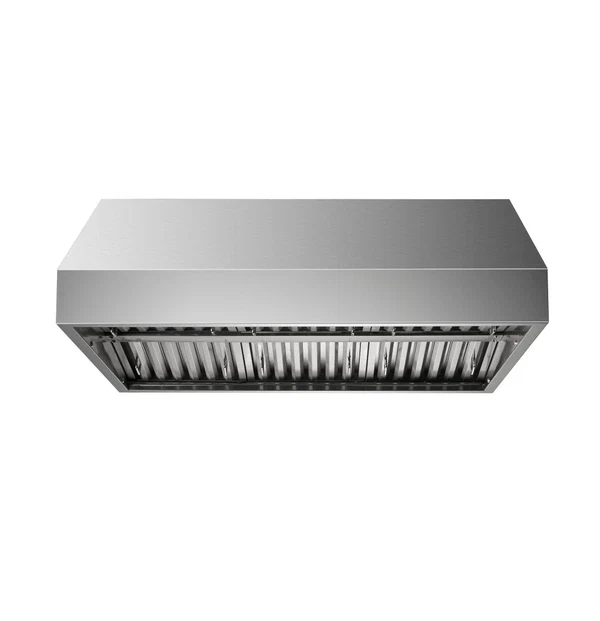
Kitchen ventilation helps manage grease, heat, steam, smoke, and cooking odours. In kitchens with cabinetry installed directly above the cooktop, under cabinet range hoods offer a space-efficient ventilation option that can fit neatly into the existing layout.
These hoods are mounted beneath upper cabinets and above the range or cooktop. Their compact profile makes them a common choice for apartments, condominiums, smaller kitchens, and renovation projects where wall space is limited.
However, not all under-cabinet hoods work in the same way. The main decision is often whether to choose a ducted system that sends cooking air outdoors or a ductless system that filters and recirculates the air inside the kitchen. Understanding the differences can help homeowners select a model that fits both the kitchen structure and everyday cooking habits.
How Under-Cabinet Hoods Work
Under cabinet range hoods use a fan to draw in air from above the cooktop. The air passes through grease filters, and then either moves outdoors through a duct system or returns to the kitchen after additional filtration.
The hood typically includes:
- A blower or fan motor
- Grease filters
- Fan-speed controls
- Task lighting above the cooktop
- Duct connection points or recirculating filters
- A compact housing designed to fit below cabinets
Under-cabinet hoods are usually rectangular and designed to be installed below wall-mounted cabinets. Depending on the model, ductwork may run through an adjoining wall, ceiling, soffit, or cabinet area before venting outside.consumerreports+1
Some models also include a pull-out or telescopic section that extends toward the front burners when needed. This feature can improve capture coverage, especially in kitchens where upper cabinets are shallower than the cooktop.
Ducted Range Hood Benefits
A ducted range hood removes cooking air from the kitchen and releases it outside through a connected duct system. This is generally the more effective option for removing heat, smoke, moisture, grease, and strong cooking odours.
Ducted under cabinet range hoods are often suitable for households that cook frequently, prepare meals with multiple burners, or use high-heat methods such as frying, grilling, searing, and stir-frying.
Potential benefits of ducted ventilation include:
- Better removal of heat and humidity
- Stronger reduction of cooking odours
- Improved grease management
- More effective smoke removal
- Reduced buildup on nearby cabinets and surfaces
- Better suitability for high-heat cooking
For good performance, the duct route should be as short and direct as possible. Long duct runs, narrow ducts, sharp turns, and multiple bends can reduce airflow and make the fan seem louder.
Before choosing a ducted model, check the existing vent location, duct size, wall structure, electrical access, and installation requirements. A professional installer may be needed if new ductwork must be added through an exterior wall or roof.
Ductless Range Hood Benefits
Ductless or recirculating hoods do not require exterior ductwork. Instead, they pull air through grease filters and charcoal filters before releasing the filtered air back into the kitchen.
This makes ductless hoods useful for apartments, condominiums, rental properties, interior kitchens, and homes where exterior venting is not possible or would require major renovation work.
A ductless model may be appropriate when:
- No exterior duct route is available
- Building restrictions limit exterior modifications
- The property is rented
- The kitchen is located away from an exterior wall
- The renovation budget does not include duct installation
- Cooking is generally light to moderate
Ductless systems can help reduce grease and some cooking odours, but they do not remove heat and moisture from the kitchen in the same way as ducted systems. They also depend on charcoal filters, which must be replaced regularly to maintain odour-reduction performance.
Many under-cabinet models are ducted, non-ducted, or convertible, meaning they can operate in either setup when installed with the correct filters and components.lowes+1
Choose the Right Size
The hood should be at least as wide as the cooking surface. A 30-inch hood is commonly used for a standard 30-inch range, while a 36-inch hood may provide wider coverage for larger cooktops.
A hood that extends slightly beyond the cooktop width can offer better capture of steam and grease, especially from front burners. Some buying guidance recommends choosing a hood at least as wide as the range and, where possible, extending beyond the range on each side.lowes
When measuring for under cabinet range hoods, record:
- Width of the cooktop
- Width and depth of the upper cabinet
- Distance between the cooktop and cabinet
- Depth of the hood required for burner coverage
- Existing duct opening location
- Electrical outlet or hardwiring location
- Clearance around cabinet doors and walls
The hood should also be installed at the manufacturer-recommended height. Installation height varies by model and cooking appliance, so product-specific guidance should always be followed.
Consider Airflow and Noise
Airflow is measured in cubic feet per minute, or CFM. This indicates how much air the hood fan can move. Higher CFM may help with stronger cooking activity, but it can also increase fan noise.
The ideal airflow level depends on the type of cooktop, kitchen size, cooking frequency, duct arrangement, and heat output of the range. A household that cooks simple meals may need less airflow than one that frequently fries, grills, or uses multiple burners at high heat.
Multiple-speed fan controls can be helpful because they allow a lower setting for light cooking and a higher setting when more ventilation is needed. Noise ratings are also worth reviewing, particularly in open-concept homes where the kitchen connects to living or dining areas.
Some under-cabinet hoods are available with a wide range of airflow capacities, materials, and finishes, from compact low-power models to higher-capacity units designed for larger cooking surfaces.kitchensource+1
Maintain Filters Regularly
Regular maintenance helps the hood perform efficiently. Grease filters should be cleaned according to the manufacturer’s instructions. Metal mesh filters may be washable, while baffle-style filters may be easier to clean in some higher-capacity models.
For ductless hoods, charcoal filters need periodic replacement. These filters are designed to absorb odours and cannot usually be washed.
Basic maintenance tasks include:
- Cleaning grease filters
- Replacing charcoal filters when needed
- Wiping down the hood exterior
- Checking fan controls and lights
- Keeping air intake areas clear
- Inspecting duct connections where accessible
A clean filter supports better airflow and reduces grease accumulation around the cooktop and cabinets.
Conclusion
The right ventilation choice depends on the kitchen’s layout, cooking habits, access to exterior ducting, and maintenance preferences. Ducted models generally provide stronger removal of heat, moisture, and cooking byproducts, while ductless models can be a practical alternative where exterior venting is unavailable. When choosing under cabinet range hoods, homeowners should compare size, airflow, filter type, mounting clearance, noise level, and whether the model supports ducted or recirculating installation. Careful measurement and regular maintenance can help ensure the hood performs effectively over time. A well-matched range hood can support a cleaner, more comfortable, and more functional kitchen.