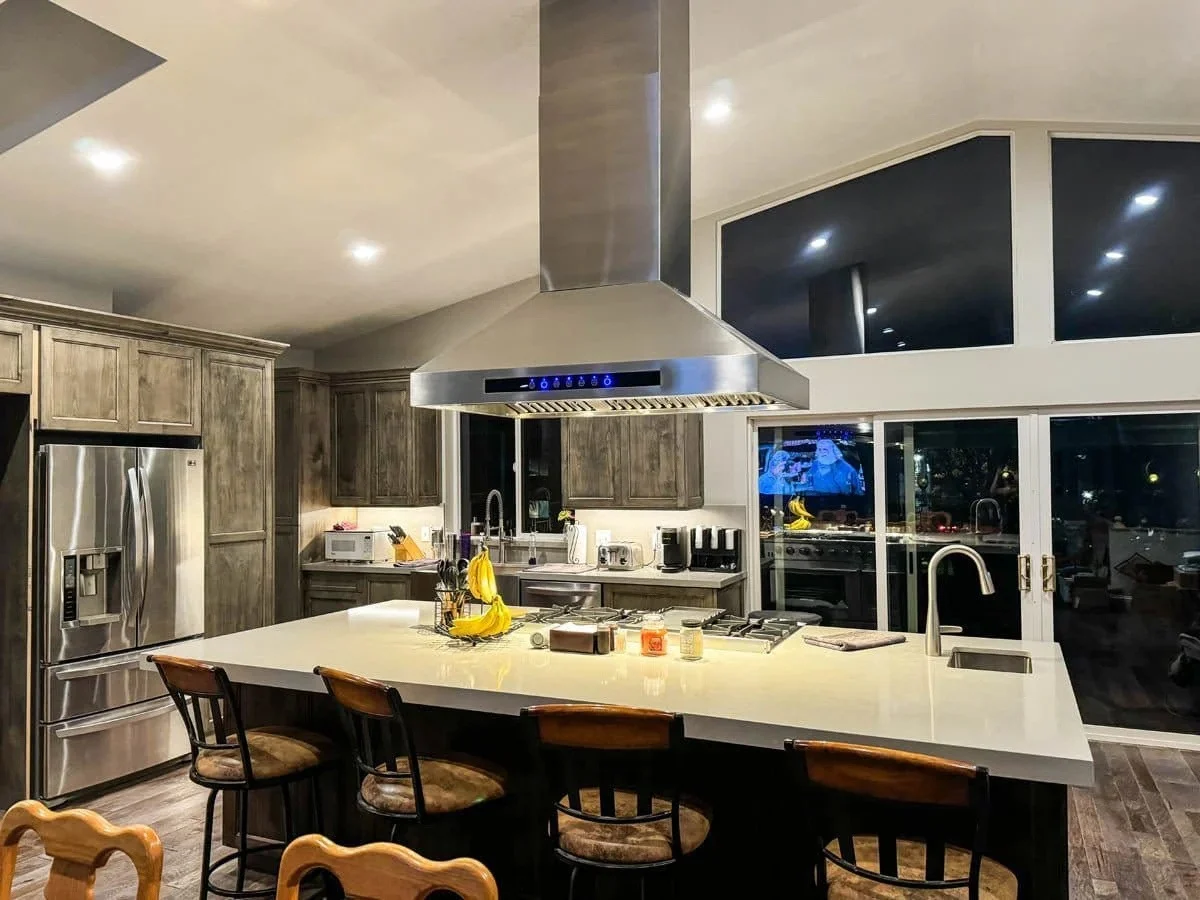
Large cooking appliances require ventilation systems capable of covering their entire cooking surface. As residential kitchens increasingly include wide ranges, griddles, multiple burners, and professional-style appliances, hood dimensions become an important part of kitchen planning. A hood that is too small may not capture smoke and grease effectively across the entire cooking area. 54-inch range hoods are designed for particularly wide cooking installations, but selecting the right model involves more than matching the hood width to the range. Airflow, mounting height, ductwork, cooking habits, and installation requirements should all be evaluated before purchase.
Why Hood Width Matters
The primary purpose of a range hood is to capture airborne byproducts produced during cooking. A wider cooking surface generally requires a wider capture area to help collect smoke, steam, grease, and odors before they spread throughout the kitchen.
A 54-inch range hoods can provide substantial coverage for large cooking appliances. However, the appropriate size depends on the actual range or cooktop beneath it. The hood manufacturer’s recommendations should be checked to determine the required overlap and mounting position.
Match the Hood to the Cooking Appliance
The type of cooking appliance has a direct impact on ventilation requirements. A large gas range with several high-output burners can produce more heat and combustion byproducts than a smaller electric cooktop.
Cooking style is also important. Frequent frying, searing, grilling, or high-temperature cooking can generate significant amounts of grease and smoke. A household that primarily simmers or prepares low-heat meals may have different ventilation needs.
Considering the appliance and cooking habits together provides a more accurate basis for selecting a hood than dimensions alone.
Consider Airflow Capacity
Range hood airflow is commonly measured in cubic feet per minute, or CFM. This measurement indicates the volume of air the ventilation system is designed to move.
Large hoods often require substantial airflow, but selecting the highest available CFM is not automatically the correct approach. The appropriate capacity depends on the cooking appliance, heat output, kitchen layout, duct configuration, and applicable installation requirements.
An adequately sized ventilation system should capture cooking byproducts without creating unnecessary noise or ventilation problems. Manufacturer specifications should be reviewed carefully before choosing a motor capacity.
Ductwork Affects Performance
The duct system is an important part of any ducted ventilation installation. Even a powerful hood may not perform as expected if the ductwork is poorly designed or excessively restrictive.
Duct diameter should be compatible with the hood manufacturer’s requirements. Long runs, multiple bends, undersized ducts, and unnecessary restrictions can reduce airflow and increase operating noise.
The route from the hood to the exterior should therefore be planned before installation. Proper sealing at connections can also help prevent air leakage.
Choosing the Right Mounting Location
A large hood needs sufficient clearance above the cooking surface. The recommended height can vary depending on the hood design, cooking appliance, and manufacturer instructions.
The surrounding cabinetry and ceiling height should also be considered. A 54-inch range hoods can occupy substantial horizontal space, so homeowners should confirm that the wall, island, or other mounting area can accommodate the equipment.
Proper positioning is particularly important because the hood needs to cover the cooking surface effectively while remaining at a safe and practical height.
Ducted and Recirculating Options
Ducted ventilation removes captured air from the kitchen and exhausts it outdoors. This method can help remove heat, moisture, smoke, and cooking odors rather than returning filtered air to the room.
Recirculating systems instead pass air through filters before returning it to the kitchen. They may be considered where exterior ducting is not practical, although they do not provide the same type of outdoor exhaust.
When planning a large hood, determining whether the kitchen can accommodate exterior ductwork should happen before purchasing the equipment.
Maintenance Is Part of Performance
A ventilation system needs regular maintenance to operate effectively. Grease filters can collect particles during cooking and should be cleaned according to the manufacturer’s recommendations.
The hood’s exterior should also be cleaned regularly to prevent grease buildup. Ductwork and other components may require inspection depending on the installation and usage.
Routine maintenance is particularly relevant in kitchens where high-temperature cooking occurs frequently because more grease and airborne particles may be produced.
Plan the Installation Before Buying
Large range hoods can involve more complicated installation than compact models. Homeowners should confirm electrical requirements, duct dimensions, mounting support, clearance requirements, and exterior termination before installation begins.
For major kitchen renovations, coordinating the hood with cabinetry, the cooking appliance, and duct routing early in the project can prevent costly modifications later.
Conclusion
Selecting a large range hood requires attention to more than its width. Cooking appliance size, heat output, airflow capacity, ductwork, mounting height, and maintenance all influence ventilation performance. When planning, homeowners should evaluate the complete kitchen layout and installation requirements rather than treating the hood as an isolated appliance. A properly selected and installed kitchen hood vent can provide effective capture and exhaust for large cooking areas while supporting a more comfortable kitchen environment.