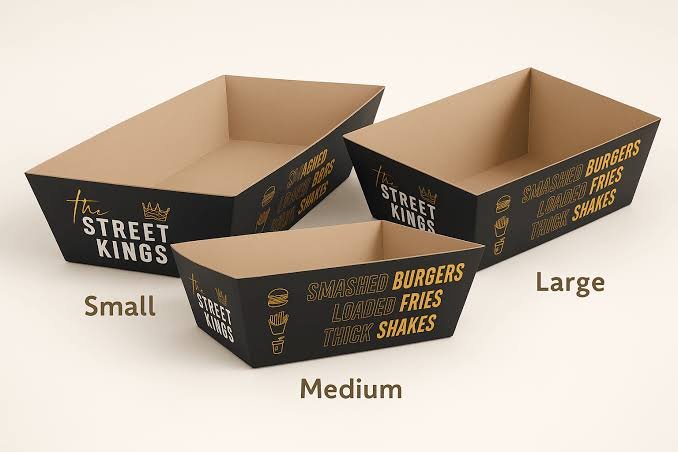
Food packaging plays an important role in protecting meals while creating a professional presentation. Restaurants, cafés, fast-food outlets, food trucks, caterers, and takeaway businesses all need packaging that is practical, durable, and attractive. Paper food trays are one popular solution because they can hold different types of meals while making serving easier.
For businesses that serve food in high volumes, buying packaging in bulk can help simplify inventory management and create consistency. Branded trays can also turn ordinary food service into a marketing opportunity by displaying a company logo, colors, patterns, or other visual elements.
When searching for Custom food tray wholesale, businesses should consider the tray’s size, material, grease resistance, printing method, quantity, and intended food application. Current suppliers offer custom sizes, different paper and paperboard materials, food-safe printing, and bulk quantities.
Food trays are commonly used for fries, burgers, nachos, sandwiches, chicken, snacks, desserts, and combination meals. The correct tray depends on the portion size and whether the food contains significant oil, sauce, or moisture.
Greaseproof paper can complement these trays by providing an additional liner or wrapping layer. Branded paper can also improve presentation while helping keep food residue away from the tray surface.
What Are Custom Food Trays?
Custom food trays are paper or paperboard serving containers produced according to a business’s required dimensions, design, and specifications. They can be supplied in different shapes and sizes for different food portions.
Some suppliers offer standard tray sizes as well as custom dimensions. Materials can include grease-resistant paperboard, kraft paper, and other food-safe stocks. Printing may range from a simple one-color logo to full-color branding.
The design can be tailored to the business’s brand identity. A burger restaurant might choose a bold logo pattern, while a café could use a more minimal design featuring its name and colors.
Custom trays can also be designed around particular serving formats. Smaller trays may work for snacks and sides, while larger formats can accommodate full meals or combo deals.
Benefits of Buying Food Trays Wholesale
Wholesale purchasing can be useful for businesses that use large quantities of packaging every day. Instead of repeatedly purchasing small quantities, businesses can maintain a larger inventory and plan their packaging requirements in advance.
Bulk purchasing can also provide greater consistency. When all trays come from the same production run or supplier, businesses can maintain consistent dimensions, printing, colors, and material quality.
Another advantage is branding. Printed trays can display a company’s logo directly where customers are eating. This creates additional brand exposure without requiring a separate promotional product.
However, businesses should consider storage space before ordering large quantities. Packaging should be stored in a clean, dry location and protected from damage or contamination.
Choosing the Right Food Tray Size
Tray size should match the food portion and serving style. A tray that is too small can make food difficult to serve, while an oversized tray can make portions appear smaller and may use more material than necessary.
Businesses should consider the complete menu when selecting sizes. For example, a restaurant may need one tray for fries and snacks, another for burgers and sandwiches, and a larger option for combo meals.
Current paper-tray suppliers offer multiple capacities and sizes, with examples ranging from small snack trays to larger formats for substantial servings.
Testing samples before ordering is a useful way to determine whether a tray works with the actual menu. Businesses can check how food fits, how easily customers can carry the tray, and whether sauces or oils create problems.
Materials and Grease Resistance
Food packaging needs to withstand the conditions created by the food being served. Burgers, fried foods, sauces, cheese, and oily products can quickly affect unsuitable paper.
Grease-resistant paperboard can help reduce oil penetration and maintain a cleaner serving experience. Some suppliers offer food trays made specifically with grease and leak resistance in mind.
Businesses should also consider whether the trays will be used for hot foods. The selected material should be suitable for the expected serving temperature and application.
When ordering custom packaging, ask the supplier about food-contact suitability, grease resistance, paper weight, coating, and printing inks. These specifications can vary significantly between products.
Personalized Greaseproof Paper for Food Packaging
Personalized greaseproof paper provides another way to combine food protection with branding. It can be printed with a logo, repeating pattern, brand colors, slogan, or other artwork and used as a wrapper or tray liner.
Suppliers currently offer personalized food papers in different sizes and formats for restaurants, cafés, bakeries, food trucks, and other food businesses. Some products are available as pre-cut sheets, while others can be supplied in rolls.
Printed greaseproof paper can be placed inside a food tray to create a branded presentation. It can also be used independently for burgers, sandwiches, pastries, fries, and other foods.
One advantage of combining branded paper with a food tray is flexibility. The same tray can potentially be used with different printed liners for seasonal campaigns, special promotions, or different menu items.
Printing and Branding Options
The printing design should be carefully planned before production. A repeating logo pattern is a popular option because the branding remains visible regardless of how the paper is folded or positioned.
Businesses can also use full-color artwork, illustrations, slogans, social media handles, or promotional messages. Some suppliers offer one-color, two-color, and full-color printing, depending on the material and production process.
For trays, businesses should consider both the inside and outside surfaces. Printing on the exterior can strengthen brand recognition, while interior printing can create a more visually distinctive presentation.
High-resolution artwork should be provided to the printer whenever possible. Before production begins, businesses should review a digital proof to confirm dimensions, colors, logo placement, and spelling.
Applications Across Food Businesses
Custom trays and printed grease-resistant paper can be used across many food-service businesses. Fast-food restaurants can use trays for burgers, fries, chicken, and combo meals, while cafés can use them for sandwiches, pastries, snacks, and breakfast items.
Food trucks can benefit from compact packaging that is easy to handle in smaller service areas. Caterers can also use branded trays and liners to create a consistent presentation at events.
Bakeries and dessert businesses may use printed paper for pastries, cookies, donuts, and other products. Personalized paper can also be used inside boxes, baskets, or serving trays.
For high-volume businesses, standardized packaging can make food preparation and service more efficient. Employees can quickly select the appropriate tray and liner based on the order.
How to Choose a Wholesale Supplier
Choosing the right supplier requires more than comparing prices. Businesses should evaluate material quality, customization options, minimum order quantities, production capacity, printing quality, delivery times, and customer support.
Request samples before placing a large order. This allows you to test the tray’s strength, dimensions, grease resistance, and appearance using your actual food products.
It is also useful to request a complete quotation. Ask whether the quoted price includes printing, setup, artwork preparation, packaging, shipping, and any other production costs.
Minimum order quantities vary significantly between suppliers. Some manufacturers advertise quantities from hundreds of pieces, while other large-scale food-tray programs may require much larger orders.
Businesses should also confirm whether the supplier can reproduce the same design and specifications for future orders. Consistency is especially important for established restaurants and food chains.
Custom food packaging can combine functionality, convenience, and brand visibility in one solution. By selecting the right tray size, material, printing method, and quantity, restaurants and food businesses can improve their serving experience while keeping packaging consistent. Adding personalized greaseproof paper as a liner or wrapper can further enhance presentation, protect against grease, and give every order another opportunity to showcase the brand.