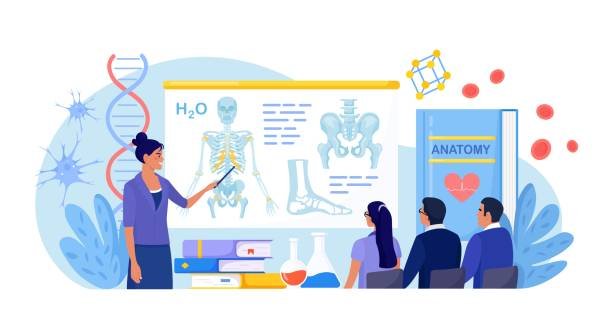
Anatomy Coursework: Structure, Study, and Success
What Anatomy Coursework Involves and Why It Matters
Anatomy coursework is a foundational part of many life science and healthcare-related academic programs. It focuses on understanding the structure of the human body and how its different systems work together. Students studying anatomy are expected to develop both theoretical knowledge and practical awareness of bodily structures, from organs and tissues to cells and microscopic components.
At its core, anatomy coursework is designed to build a strong scientific understanding that supports fields such as medicine, nursing, physiotherapy, biomedical sciences, and sports science. According to educational resources widely used in medical training, including standard references like Gray’s Anatomy, the study of anatomy remains one of the most important pillars of clinical education.
Foundations of Human Anatomy Learning
The foundation of anatomy coursework begins with learning the major systems of the human body. These include the skeletal, muscular, nervous, cardiovascular, and respiratory systems. Students are not only required to memorize structures but also understand how these systems interact to maintain life.
Modern anatomy education often combines textbook learning with visual tools such as diagrams, models, and digital simulations. Institutions like the National Institutes of Health (NIH) emphasize the importance of integrating visual and practical learning methods to improve comprehension and retention in biological sciences.
Relevance to Healthcare and Science Careers
Anatomy coursework plays a direct role in preparing students for professional careers in healthcare and research. Medical professionals rely on anatomical knowledge daily when diagnosing conditions, interpreting scans, or performing procedures. A strong academic foundation in anatomy ensures that students can progress confidently into more advanced clinical studies.
This subject also develops analytical thinking and observational skills, both of which are essential in scientific research environments. Students learn to interpret complex biological information and apply it to real-world scenarios, making anatomy a highly practical and career-relevant field.
Key Topics and Learning Methods in Anatomy Coursework
Anatomy coursework is structured around several key learning areas that gradually build a detailed understanding of the human body. These topics are usually introduced in stages, beginning with basic structures and progressing toward more complex systems and interactions.
Gross anatomy focuses on structures that can be seen with the naked eye, such as bones, muscles, and organs. In contrast, microscopic anatomy explores cells and tissues using microscopes and laboratory techniques. Both areas are essential for building a complete understanding of how the body functions at different levels.
Gross Anatomy and Microscopic Anatomy
Gross anatomy forms the visible framework of anatomy coursework. Students study human body regions such as the head, torso, and limbs, learning how each part contributes to overall function. Microscopic anatomy, on the other hand, introduces students to histology, the study of tissues, which provides insight into how cells organize and specialize.
Together, these two areas allow learners to connect large-scale structures with cellular-level processes. This dual approach is essential in medical education, where understanding both visible and microscopic structures supports accurate diagnosis and treatment planning.
Laboratory Work and Digital Tools
Practical laboratory sessions are a central component of anatomy coursework. Students often work with preserved specimens, anatomical models, and dissection tools to gain hands-on experience. These activities help reinforce theoretical learning by providing real-world context.
In addition to traditional lab work, modern education increasingly incorporates digital tools such as 3D anatomy software and virtual dissection platforms. These technologies allow students to explore the human body in interactive ways, making complex structures easier to understand and visualize.
For students seeking additional academic guidance and structured support, many institutions and learning platforms offer resources such as anatomy coursework help to strengthen understanding and improve academic performance.
Common Challenges Students Encounter
While anatomy coursework is highly rewarding, it is also known for its academic difficulty. One of the most common challenges students face is the large volume of information that must be learned and retained. The human body contains hundreds of structures, each with specific names, functions, and relationships.
Memorization Load
Memorization is often one of the most demanding aspects of anatomy study. Students must learn detailed terminology, spatial relationships, and functional processes. Without effective study strategies, it can become overwhelming to retain all necessary information.
However, memorization alone is not sufficient. Successful students learn to connect concepts rather than simply recalling isolated facts. This deeper level of understanding is essential for applying knowledge in exams and practical assessments.
Translating Theory to Practice
Another challenge is applying theoretical knowledge in practical settings. For example, identifying structures on diagrams is different from recognizing them in real specimens or clinical scenarios. Bridging this gap requires consistent practice and exposure to real-world or simulated environments.
This transition from theory to practice is a key milestone in anatomy education and often determines how well students perform in advanced stages of their studies.
Strategies for Effective Learning
To succeed in anatomy coursework, students benefit from structured and consistent study habits. Because the subject is cumulative, early understanding significantly influences later performance.
Active Recall and Spaced Repetition
One of the most effective learning strategies in anatomy is active recall, which involves testing oneself regularly rather than passively reading notes. Spaced repetition, where information is reviewed at increasing intervals, also helps strengthen long-term memory retention.
These methods are widely supported by cognitive science research and are commonly recommended in medical education programs worldwide.
Integrating Visual Learning
Visual learning plays a major role in mastering anatomy. Diagrams, labeled models, and interactive software help students understand spatial relationships between structures. Many learners find that combining written notes with visual aids significantly improves comprehension.
Consistent practice with labeling diagrams and identifying structures also enhances recall during exams and practical assessments. This approach ensures that students develop both conceptual understanding and visual recognition skills.
Assessment Methods and Expectations
Anatomy coursework is typically assessed through a combination of written examinations, practical tests, and coursework assignments. Written exams evaluate theoretical understanding, while practical assessments test the ability to identify structures and apply knowledge in real scenarios.
Coursework essays often require students to analyze specific anatomical systems or explain physiological processes in detail. These assignments assess critical thinking, scientific writing skills, and the ability to synthesize information from multiple sources.
Academic expectations in anatomy are high, as the subject forms a foundation for professional healthcare training. Students are expected to demonstrate accuracy, consistency, and a strong understanding of terminology and concepts.
Conclusion
Anatomy coursework is a challenging but essential part of scientific and medical education. It provides a deep understanding of the human body, preparing students for careers in healthcare, research, and related fields. While the subject requires dedication and consistent effort, it also offers valuable intellectual and professional rewards.
By combining structured study methods, practical experience, and modern learning tools, students can build strong anatomical knowledge and succeed academically. A clear understanding of core concepts, along with effective revision strategies, ensures long-term success in both coursework and future professional practice.