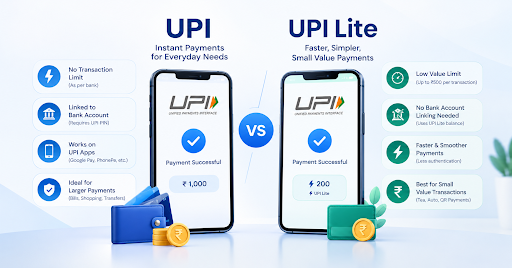
The introduction of UPI Lite has changed how small-value payments are handled in India. Unlike traditional UPI transactions, which generally require a UPI PIN to authorize payments, UPI Lite allows eligible small-value payments without entering a PIN for each transaction, subject to applicable limits and rules. Understanding upi vs upi lite helps users choose a payment method that suits their everyday needs. UPI Lite also offers a convenient way to manage smaller expenses, while its prepaid-style functionality makes it useful for people who prefer to set aside funds for frequent purchases.
How UPI Lite Works for Small Payments
UPI Lite works by allowing users to add funds from their linked bank account to a designated UPI Lite balance within a supported application. These funds can then be used for eligible small-value transactions without entering a UPI PIN for each payment, within the applicable transaction and balance limits. This makes UPI Lite useful for purchasing snacks, buying groceries, or paying local vendors when a quick transaction is convenient.
One of the standout features of UPI Lite is its streamlined payment experience. By reducing the steps required for eligible transactions, it can make everyday payments more convenient. Users should check their payment application’s current limits and conditions because transaction rules may change.
UPI Lite also has characteristics similar to a prepaid payment instrument, as users add funds before spending them through the feature. However, UPI Lite should not automatically be treated as a formally classified prepaid payment instrument under regulatory definitions. Understanding this distinction helps users compare payment options accurately.
Comparing UPI and UPI Lite
When discussing upi vs upi lite, it is essential to understand the situations in which each option may be useful. Regular UPI supports a broad range of payments directly through linked bank accounts and generally requires authentication using a UPI PIN. It can be suitable for larger purchases, transfers, and transactions that exceed UPI Lite’s applicable limits.
On the other hand, UPI Lite focuses on eligible small-value payments. Consumers who frequently make small purchases can benefit from the convenience of not having to enter a PIN for each eligible transaction. For example, a commuter purchasing a drink from a local vendor can make a quick payment without the additional PIN-entry step.
The comparison of upi vs upi lite also highlights differences in how users manage their money. Regular UPI transactions are generally debited directly from a linked bank account, while UPI Lite uses a separately maintained balance that users fund in advance. This prepaid-style approach can help users set aside money for routine expenses.
Although UPI Lite shares some practical characteristics with a prepaid payment instrument, the two terms are not necessarily interchangeable. A prepaid payment instrument is a distinct regulatory category, while UPI Lite is a specific payment feature within the UPI ecosystem. Users should understand the applicable product terms rather than assuming that both operate under identical rules.
Addressing Common User Concerns
A common concern among users regarding UPI Lite is whether the absence of a PIN for eligible transactions compromises security. UPI Lite operates within defined transaction and balance limits, but users should still protect their phones, secure their payment applications, and follow the security guidance provided by their bank and app provider.
Another area where confusion often arises is the process of loading funds into the UPI Lite balance. Users generally need to select the relevant UPI Lite feature in a supported application, choose an amount within the permitted limits, and authorize the loading process as required. Once the funds are available, they can be used for eligible payments until the balance is depleted.
When comparing upi vs upi lite, users should also consider transaction limits, supported applications, payment requirements, and how they prefer to manage everyday expenses. Someone who makes frequent low-value purchases may appreciate the convenience of UPI Lite, while regular UPI remains useful for a broader range of payment needs.
Paying through Bajaj Pay
Users looking to explore digital payment options can check the services available through Bajaj Pay, the Bharat Connect payments platform on Bajaj Finserv. Bajaj Pay supports eligible digital payments through supported methods. Availability of UPI Lite functionality, fund loading, and related features depends on the application and its current offerings, so users should verify these details before proceeding.
To explore payment options, users can follow these general steps:
- Open the Bajaj Finance App or visit the Bajaj Pay website.
- Select the relevant payment or UPI option available on the platform.
- Review the supported features and follow the instructions displayed.
- If UPI Lite is available through the selected application, check the permitted amount and loading requirements.
- Confirm the transaction only after reviewing the details.
Using a supported digital payment platform can help users manage eligible transactions conveniently. People considering a prepaid payment instrument should compare its terms, limits, and permitted uses with those of UPI Lite before deciding which option fits their needs.
Conclusion
UPI Lite offers a convenient way to handle eligible small-value transactions by reducing the need to enter a UPI PIN for each payment. Understanding upi vs upi lite helps users identify the differences between direct bank-account payments and payments made from a separately funded UPI Lite balance.
Although UPI Lite has some characteristics of a prepaid payment instrument, the terms describe different concepts and should not be treated as identical. By reviewing transaction limits, security requirements, and supported features, users can make informed decisions about their everyday digital payments. Explore the available options through supported payment applications and choose the method that best suits your payment habits.