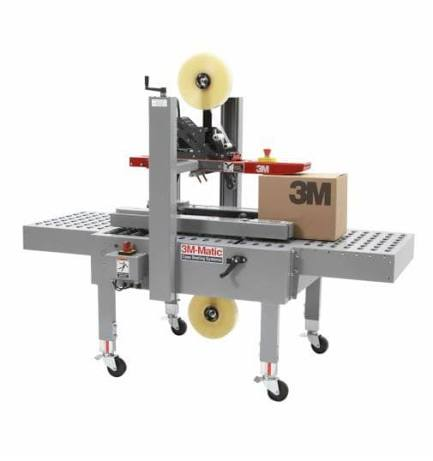
Case sealing equipment plays a major role in packaging operations where cartons need to be closed quickly, consistently, and securely. In warehouses, fulfillment centers, food processing plants, and manufacturing facilities, automatic and semi-automatic taping systems help reduce manual labor while improving sealing consistency. A 3M taper is commonly used in these environments to apply pressure-sensitive tape to the top and bottom seams of corrugated cases.
To keep this type of equipment operating efficiently, regular inspection, cleaning, adjustment, and timely part replacement are essential. Understanding the main components and the maintenance practices that support them can help reduce unexpected downtime and improve sealing performance.
How Does a 3M Taper Work?
A 3M taper is designed to guide a carton through a taping head that applies adhesive tape across the carton seam. Depending on the model, the machine may accommodate uniform cases of the same size or random case sizes that require automatic adjustment.
The taping head typically includes rollers, cutting mechanisms, tension controls, springs, belts, and other moving components. As a box enters the machine, the tape is applied to the leading edge, pressed along the seam, cut at the proper point, and then wiped securely onto the trailing surface.
For this process to remain consistent, the components must stay properly aligned and move freely.
Why Regular Maintenance Matters
Packaging equipment often operates for long periods under repetitive mechanical stress. Dust, cardboard fibers, adhesive residue, and general wear can gradually affect machine performance.
A poorly maintained 3M taper may begin showing signs such as uneven tape application, tape tearing, incomplete seals, excessive tension, or cartons becoming misaligned during operation.
Preventive maintenance can help identify these issues before they cause production interruptions. It can also extend the useful life of components by reducing unnecessary strain on rollers, belts, blades, and bearings.
What Components Should Be Inspected Most Often?
Several parts of a case sealer require regular attention because they are directly involved in carton movement and tape application.
The taping head should be inspected for adhesive buildup, worn rollers, damaged springs, or dull cutting blades. Even small amounts of adhesive residue can interfere with smooth tape feeding.
Drive belts should also be checked for cracking, glazing, stretching, or uneven wear. Belts that lose grip may cause cartons to move inconsistently through the machine.
Rollers and guides should rotate freely and remain properly aligned. If these parts become damaged or loose, the carton may shift during sealing and produce an uneven tape line.
A well-maintained 3M taper should also have properly adjusted tape tension so the tape applies firmly without stretching excessively or tearing.
How Often Should a Case Sealer Be Cleaned?
Cleaning frequency depends on the working environment and how often the machine operates. In high-volume facilities, basic cleaning may be necessary daily or weekly.
Dust and corrugated cardboard debris should be removed from moving areas, sensors, belts, and guides. Adhesive residue should be cleaned carefully from rollers and cutting components using appropriate cleaning methods recommended for the machine.
Operators should avoid using cleaning chemicals that can damage rubber, plastic, or coated surfaces.
More detailed inspections can be performed at scheduled intervals based on operating hours, production volume, and manufacturer recommendations.
How to Identify Worn or Damaged Parts
Operators should pay attention to changes in sound, movement, and sealing quality. Unusual vibration, squeaking, slipping, or inconsistent tape placement can indicate mechanical wear.
Cutting blades may require replacement when tape is no longer cut cleanly. Worn rollers may fail to press tape evenly against the carton surface. Springs can also lose tension over time, affecting how the taping head moves.
Documentation such as parts diagrams and equipment manuals can help identify the correct replacement component before maintenance begins.
Using the proper replacement part is important because even visually similar components may differ in dimensions, mounting points, or operating tolerances.
Why Parts Diagrams Are Important
Parts diagrams provide a visual reference for the internal structure of the machine. They can help maintenance personnel identify individual assemblies, understand how components fit together, and locate the correct part number.
This is particularly useful when servicing an older 3M taper, where labels or markings may no longer be clearly visible.
Exploded diagrams can also reduce the risk of ordering an incorrect part because they show how components relate to nearby assemblies. When combined with the machine’s model and serial information, they make troubleshooting more systematic.
Improving Equipment Reliability Through Preventive Checks
A simple preventive maintenance routine can improve day-to-day reliability. Operators should inspect the machine before production begins, verify tape feeding, check belt movement, and ensure the taping head is functioning smoothly.
Loose fasteners should be tightened when necessary, while worn components should be replaced before they fail completely.
Keeping maintenance records can also be useful. Recording part replacements, adjustments, recurring problems, and service dates allows maintenance teams to identify patterns and plan future repairs more effectively.
Conclusion
Reliable case sealing depends on consistent maintenance, correct adjustment, and timely replacement of worn components. Regular inspections help identify problems with belts, rollers, blades, springs, and tape tension before they disrupt packaging operations. Maintenance teams reviewing diagrams or sourcing tool box parts should confirm equipment model numbers and part specifications before replacing components. This helps ensure compatibility and reduces the chance of installation problems. With routine cleaning, inspection, and proper servicing, a 3M taper can continue to provide consistent carton sealing while supporting efficient and dependable packaging operations.