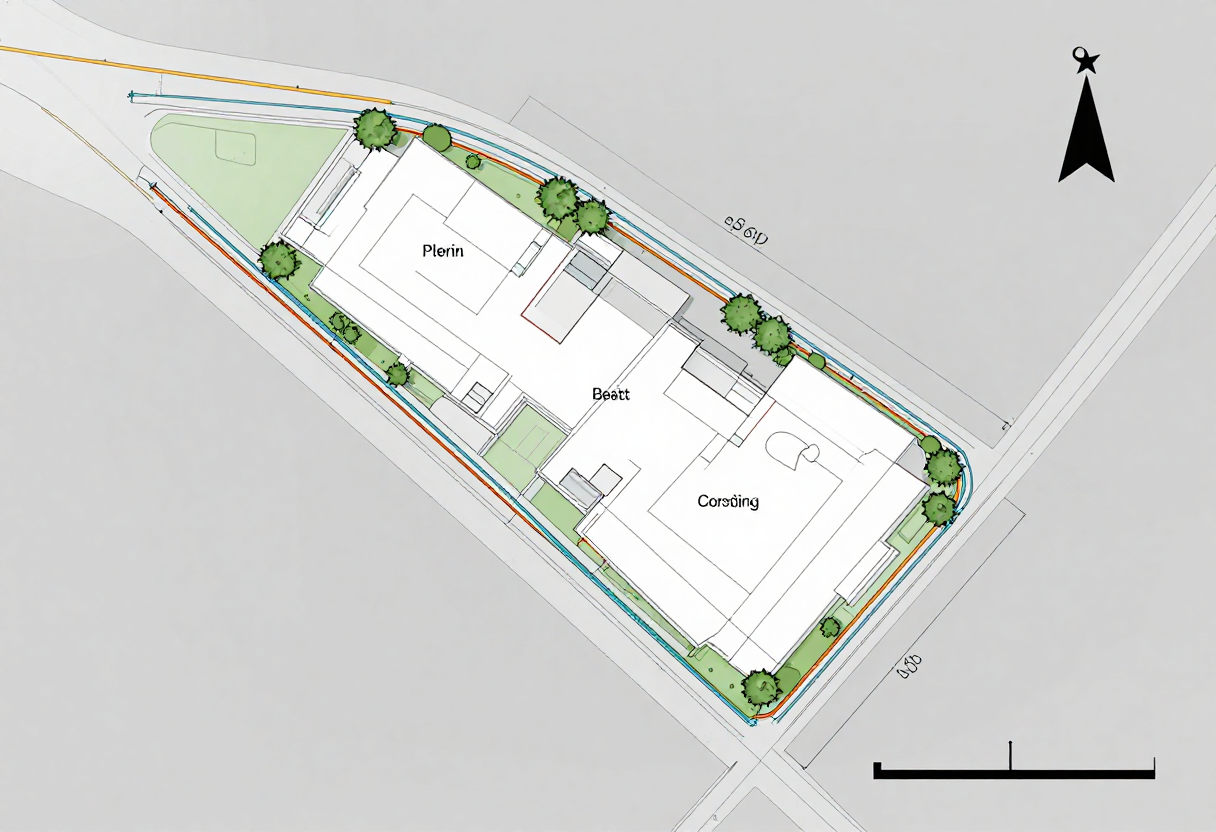
A site plan is more than just a technical drawing—it is the backbone of any successful construction or land development project. Whether you’re building a home, planning a commercial property, or applying for permits, understanding site plans is essential.
With the rise of site plans online, creating and accessing these documents has become faster and more efficient than ever. In this complete guide, we’ll break down what a site plan is, why it matters, and how it differs from a survey—all in simple, practical terms.
What Is a Site Plan?
A site plan is a detailed, scaled drawing that shows how a specific piece of land will be used. It outlines the layout of structures, boundaries, and key features on a property.
Typically, a site plan includes:
- Property boundaries and dimensions
- Existing and proposed buildings
- Driveways, parking areas, and pathways
- Landscaping elements like trees and gardens
- Utility lines (water, sewer, electricity)
- Drainage systems and elevation details
Think of it as a “bird’s-eye view” of your property that shows exactly how everything fits together.
Today, many homeowners and professionals use site plans online tools to design, edit, and share these layouts quickly without needing complex software.
Why Are Site Plans Important?
Site plans play a critical role in construction, design, and legal approval processes. Without one, it’s nearly impossible to move forward with most projects.
Here’s why they matter:
1. Planning and Visualization
A site plan helps you visualize how your project will look before construction begins. It ensures everything is placed correctly and efficiently.
2. Legal Compliance
Local authorities often require site plans for permits and approvals. They ensure your project follows zoning laws, building codes, and property regulations.
3. Avoiding Costly Mistakes
Accurate site plans reduce errors during construction, saving time and money.
4. Better Communication
Architects, contractors, and engineers rely on site plans to understand project requirements clearly.
Using site plans online tools also allows teams to collaborate easily, making updates in real-time.
Key Elements of a Site Plan
A professional site plan contains several essential components. Understanding these helps you read and create plans more effectively.
Property Lines and Boundaries
These define the legal limits of your land. They are crucial for ensuring that structures are built within permitted areas.
Structures and Buildings
Both existing and proposed structures are shown, including dimensions and placement.
Access Points
Driveways, roads, and entrances are clearly marked to show how people and vehicles will move around the property.
Utilities and Services
This includes water lines, drainage systems, electrical connections, and sewage systems.
Landscaping Features
Trees, lawns, fences, and outdoor spaces are included to give a complete picture of the property.
Topography and Elevation
Some site plans include slope and elevation details, especially for complex terrain.
Site Plan vs Survey: What’s the Difference?
Many people confuse a site plan with a survey, but they serve different purposes. Understanding the difference between site plan vs survey is essential.
Site Plan
- Focuses on design and layout
- Shows proposed and existing structures
- Used for planning and permits
- Includes landscaping and utilities
Survey
- Focuses on accurate measurements
- Conducted by licensed surveyors
- Shows exact property boundaries and legal data
- Used for legal documentation and disputes
In simple terms, a survey provides the precise data, while a site plan uses that data to design how the land will be used.
Both are important, and often a survey is used as the foundation for creating a site plan.
Benefits of Using Site Plans Online
Digital tools have transformed how site plans are created and shared. Using site plans online offers several advantages:
Speed and Convenience
You can create or edit plans quickly without waiting for manual drafts.
Cost-Effective
Online tools are often more affordable than traditional design services.
Easy Collaboration
Share plans with architects, clients, or contractors instantly.
Accessibility
Access your plans anytime, from anywhere.
User-Friendly Tools
Modern platforms are designed for beginners and professionals alike.
For homeowners and small developers, online site planning tools provide a practical and efficient solution.
When Do You Need a Site Plan?
You’ll need a site plan in many situations, including:
- Building a new home or structure
- Applying for construction permits
- Renovating or extending existing buildings
- Installing driveways, pools, or fences
- Landscaping projects
- Commercial property development
Even for smaller projects, having a clear site plan can prevent issues and ensure smooth execution.
How to Create a Site Plan
Creating a site plan may seem complex, but it becomes easier when broken down into steps:
Step 1: Gather Property Information
Start with a property survey or official land records.
Step 2: Measure the Area
Ensure all dimensions are accurate.
Step 3: Sketch the Layout
Include buildings, access points, and utilities.
Step 4: Add Details
Incorporate landscaping, drainage, and elevation if needed.
Step 5: Use Online Tools
Leverage site plans online platforms to create a clean, professional design.
Step 6: Review and Finalize
Double-check accuracy before submitting for approval or construction.
Final Thoughts
A site plan is an essential tool for anyone involved in construction, property development, or land management. It provides a clear, detailed view of how a space will be used, helping ensure efficiency, compliance, and success.
Understanding the difference between site plan vs survey also helps you avoid confusion and ensures you use the right document at the right time.
With modern site plans online tools, creating and managing site plans has never been easier. Whether you’re a homeowner planning a small project or a developer working on a large-scale build, mastering site plans will give you a strong foundation for success.