Food packaging is more than a way to carry or wrap a meal. It protects the product, improves presentation, and gives businesses another opportunity to showcase their brand. Restaurants, cafés, bakeries, food trucks, burger shops, and delis regularly use paper wraps and liners to create a cleaner and more professional serving experience.
Deli paper is especially useful because it can be used for wrapping sandwiches, burgers, fries, pastries, snacks, and other food products. Depending on the material and treatment, it can provide resistance to grease and moisture while remaining lightweight and easy to handle. Businesses can choose sheets, rolls, or specially converted formats according to their daily packaging requirements.
For growing food businesses, custom deli paper wholesale can provide a practical way to purchase branded packaging in larger quantities. Wholesale ordering can be useful when a business has consistent packaging requirements and wants its paper to match its logo, colors, or overall visual identity.
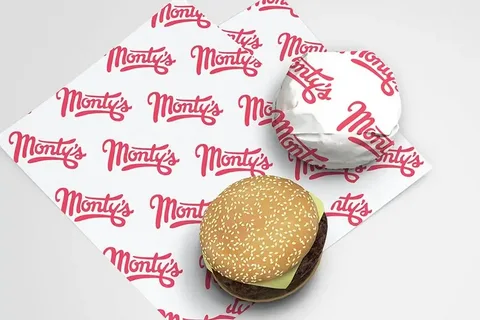
Custom printing can turn ordinary food wrapping into branded packaging. A repeating logo, pattern, slogan, or simple graphic can make every wrapped product instantly recognizable. This is particularly valuable for businesses that want their packaging to look consistent across takeaway orders, dine-in service, and delivery.
Before ordering, however, businesses should consider more than appearance. Paper weight, grease resistance, food-contact suitability, sheet size, printing method, minimum order quantity, and delivery time can all affect the final product. Taking time to compare specifications can help avoid unnecessary waste and unexpected costs.
What Is Custom Deli Paper?
Deli paper is a type of food-service paper commonly used to wrap or line food products. It can be supplied as individual sheets or rolls and may be available in different paper grades, colors, coatings, and printing options.
Some products are designed primarily for dry foods, while others provide stronger resistance to grease or moisture. Suppliers may offer grease-resistant paper, waxed paper, kraft paper, parchment-style materials, and other food packaging options.
The right material depends on the food being packaged. A bakery wrapping dry pastries may have different requirements from a burger restaurant serving oily or saucy foods. Businesses should therefore explain their intended application when requesting a quotation.
Why Branded Deli Paper Matters
Food packaging can contribute significantly to a customer’s overall impression of a business. A plain wrapper performs its basic function, but printed packaging can communicate a brand identity at the same time.
A business can print its logo, name, website, social media information, illustrations, or repeating patterns onto suitable paper. Minimal designs can create a clean appearance, while bold patterns can make packaging more noticeable.
Branded paper can also create consistency. If a restaurant already uses branded boxes, bags, cups, and stickers, matching the deli paper can help create a unified packaging system.
For smaller food businesses, printed wrapping can also provide affordable brand exposure. Customers may see the packaging before they see a storefront or menu, making the wrapper part of the overall customer experience.
Choosing the Right Paper Material
The material should always be selected according to the food application. Grease resistance is particularly important for burgers, fried foods, sandwiches, and other products containing oil.
Kraft paper is another popular option because of its natural appearance and association with paper-based packaging. White paper may provide a cleaner background for detailed branding and bright printing.
Businesses should also consider paper weight. Lightweight material can be suitable for simple wrapping, while heavier paper may provide greater durability for larger or heavier foods.
When possible, request samples before placing a large order. Testing samples with actual products can reveal whether the paper handles grease, moisture, heat, and folding as expected.
Custom Printing and Design Options
The design of deli paper should reflect the business rather than simply filling the paper with graphics. A repeating logo pattern is one common approach because it maintains brand visibility regardless of how the sheet is folded.
Other options include branded illustrations, slogans, icons, website addresses, and themed patterns. Some suppliers provide one-color, multiple-color, or full-color printing depending on the paper and production method.
Businesses should provide high-quality artwork whenever possible. Vector logo files can help printers maintain sharp lines and accurate proportions.
It is also important to approve a digital proof before production. Checking the logo position, colors, spelling, dimensions, and repeating pattern at this stage can prevent costly mistakes after printing begins.
Selecting the Correct Size
Deli paper is available in many dimensions, and the correct size depends on how the food will be packaged. A small sheet may work well for cookies or pastries, while larger sheets may be required for burgers, sandwiches, wraps, or food baskets.
Some suppliers provide standard dimensions, while others offer custom sizes. Current supplier listings show a wide range of sheet sizes, including square and rectangular formats.
Businesses should measure their existing packaging process before choosing a size. The paper should be large enough to wrap the product securely without creating excessive unused material.
For high-volume operations, optimizing sheet dimensions can also reduce waste and improve packaging speed.
Buying Wholesale for Better Planning
Wholesale purchasing can make sense when a business uses large quantities of deli paper every day. Restaurants and food manufacturers may consume hundreds or thousands of sheets over relatively short periods.
Buying in larger quantities can simplify inventory management and reduce the need for frequent reordering. However, businesses should balance unit pricing against storage requirements and cash flow.
Minimum order quantities can vary considerably between suppliers. Some manufacturers advertise orders starting around 1,000 sheets, while other suppliers provide different quantity ranges or wholesale arrangements.
Before placing an order, ask for a complete quotation that includes paper specifications, printing, packaging, shipping, production time, and any setup charges. Comparing the complete cost is more useful than comparing the paper price alone.
Finding Deli Paper Near Your Business
Local sourcing can be useful when a business needs faster communication, easier sample collection, or lower domestic shipping costs. Searching for custom deli paper near me can help identify packaging companies, printing businesses, and food-packaging suppliers in the surrounding area.
In Lahore, for example, several businesses listed in local search results operate in packaging, printing, or food-packaging categories. Options include CustomPack.pk — Custom Packaging & Logo Printing, PACKIT.PK, and Packaging Master. These businesses are packaging-related, but you should confirm directly whether they currently manufacture or stock the exact deli paper specification you need.
Another local option is A1 Traders Food Packaging in Anarkali Bazaar, which is categorized as a wholesaler. Oasis Packaging Industries (Pvt) Ltd. is another packaging company in Lahore’s Sundar Industrial Estate.
When contacting a local supplier, provide your required paper type, size, GSM, printing colors, estimated quantity, and food application. This makes it easier for the supplier to determine whether they can meet your requirements.
Making the Right Deli Paper Order
A successful deli paper order starts with clear specifications. Before requesting prices, decide whether you need sheets or rolls, the approximate dimensions, paper color, printing design, required quantity, and level of grease or moisture resistance.
Ask whether the material is appropriate for direct food contact and request any relevant documentation required for your market. If the paper will be used with hot, oily, or moist foods, explain this clearly to the supplier.
It is also worth requesting samples before committing to a large production run. A sample lets you evaluate print quality, paper strength, folding performance, grease resistance, and overall appearance.
For businesses ordering regularly, supplier consistency should also be considered. The ability to reproduce the same paper quality, dimensions, colors, and printing across future orders can be just as important as the initial price.
Custom deli paper can combine practical food protection with effective branding, making it a useful packaging option for restaurants, cafés, bakeries, and takeaway businesses. Whether you order locally or source from a larger manufacturer, compare material quality, printing capabilities, sizes, quantities, and food-contact requirements before choosing your supplier. With the right specifications and a well-planned design, custom deli paper wholesale can provide consistent packaging while helping your food brand create a recognizable presentation.