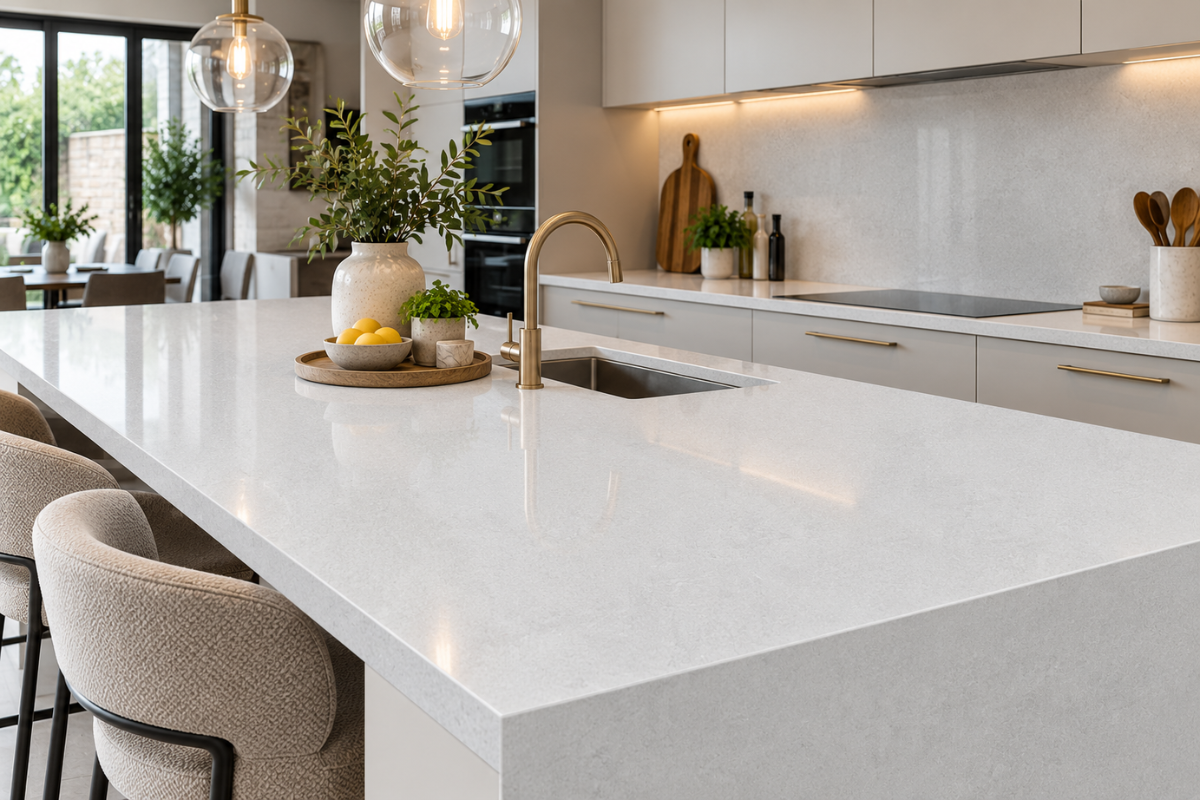
Choosing a worktop involves more than selecting a colour that complements kitchen cabinets. The surface needs to withstand regular food preparation, spills, cleaning, moisture, and everyday contact with cookware while maintaining its appearance. Nile quartz has become a widely used option because engineered quartz surfaces combine natural quartz with other materials to create consistent patterns and practical surface characteristics. Within broad quartz collections, homeowners can find options ranging from understated neutrals to marble-inspired patterns and more distinctive finishes. Understanding these characteristics can make comparing worktop options much easier.
What Is Nile Quartz?
Quartz worktops are engineered surfaces rather than solid blocks of naturally formed quartz. They typically use natural quartz particles combined with binders and pigments. This manufacturing process allows manufacturers to create more controlled colours and patterns than are generally possible with natural stone alone.
Nile quartz refers to a collection of quartz worktop styles available in a broad selection of colours and designs. The Nile Range includes numerous appearances, including whites, greys, beige tones, marble-inspired patterns, shimmer finishes, and darker designs. The collection currently lists options such as Almond Beige, Aspen Gold, Bianco Glacier, Carrara Gold, Classic White, Concrete Earth, Concrete Oyster, Grigio Fantasy, Ice White, and Taj Mahal.
What Makes Quartz Suitable for Kitchen Worktops?
Quartz is also known for good resistance to everyday scratching and impact. However, resistance does not mean the surface is impossible to damage. Sharp objects, heavy impacts, abrasive products, and inappropriate cleaning methods can still affect a worktop.
One of the main characteristics of Nile Quartz is the practical performance associated with engineered quartz surfaces. Quartz worktops are non-porous, meaning liquids are not readily absorbed into the surface. This can make everyday spills easier to clean and reduce concerns associated with liquids penetrating porous stone.
Exploring Colours and Design Styles
When comparing samples, it is useful to examine them under the lighting conditions in the intended room. Artificial lighting, daylight, cabinet colours, flooring, and wall finishes can all influence how a quartz surface appears.
Design flexibility is another reason Nile Quartz can suit different kitchen layouts. The Nile Range includes a large selection of visual styles rather than being limited to one particular colour family. Its listed designs include classic whites, warm neutrals, grey-toned surfaces, marble-effect patterns, shimmer finishes, and darker options.
How Durable Is Nile Quartz?
Quartz surfaces are engineered to provide resistance to everyday wear, including scratches, impacts, and staining. Their hardness and low water absorption make them practical for frequently used kitchen environments.
The durability of Nile Quartz should be considered in relation to normal household use rather than as a guarantee that the material cannot be damaged. Heat also requires attention. Although quartz worktops have a degree of heat resistance, placing extremely hot cookware directly onto a worktop can potentially damage the resin component used in engineered quartz. Using a heat-resistant mat or trivet is therefore a sensible precaution, particularly when moving cookware directly from an oven or hob.
Cleaning and Maintaining Quartz Worktops
Abrasive scouring pads, harsh chemicals, and unsuitable cleaning products should be avoided unless the surface manufacturer specifically confirms that they are appropriate. Cutting directly on the worktop is also unnecessary and can potentially damage the surface or kitchen knives.
Routine maintenance for Nile Quartz is generally straightforward. For everyday cleaning, a soft cloth or sponge with mild soap and water is typically sufficient. Promptly removing spills can also help keep the surface looking consistent over time.
Conclusion
Before making a final decision, compare physical samples, consider the room’s lighting, check care instructions, and confirm how the selected surface should be handled around heat, cut-outs, and joins. For those looking at a concrete-inspired appearance, Concrete Earth Quartz can also be considered as part of the wider selection.
Ultimately, the right surface is one that complements the overall design while matching the practical demands placed on the worktop every day.