Video has become an important communication tool for businesses, events, brands, and organizations. From corporate presentations and promotional campaigns to interviews and social media content, professionally produced video can communicate information in a way that is visual, structured, and easier for audiences to engage with.
Choosing the right video production company involves more than comparing cameras or asking about editing software. A successful production depends on planning, storytelling, cinematography, sound, post-production, and an understanding of the intended audience. In a competitive market such as Dubai, businesses can also benefit from working with teams familiar with local production requirements and different commercial environments.
What Does a Video Production Company Do?
A video production company manages some or all of the stages involved in creating professional video content. Depending on the project, this can include concept development, scripting, filming, sound recording, editing, animation, colour grading, and final delivery.
Some companies specialize in specific areas, while others provide a broader range of services. For example, Dreambox lists corporate, commercial, animation, social media, podcast, testimonial, brand, and event video production among its services.
This broader capability can be useful when a business needs different types of content for websites, advertising campaigns, internal communications, exhibitions, or social platforms.
Why Pre-Production Matters
Good video production begins before the cameras are switched on.
During pre-production, the creative team can establish the video’s purpose, target audience, key message, locations, schedule, visual direction, and required equipment. Depending on the project, pre-production may also involve scripting, storyboarding, casting, location scouting, and arranging filming permissions.
A structured planning process helps reduce unnecessary delays during filming. It also gives everyone involved a clearer understanding of what the finished video should communicate.
For corporate projects, planning is particularly important because filming may need to take place around working schedules, offices, conferences, product launches, or other business activities.
Different Types of Video Production
A video production company may work across multiple formats, each with different creative and technical requirements.
Corporate Videos
Corporate videos can include company profiles, executive interviews, internal communications, recruitment content, training material, and business presentations. The visual style is usually aligned with the organization’s branding and communication objectives.
Commercial Videos
Commercial production is typically focused on presenting a product, service, or brand to a defined audience. These projects may involve scripts, actors, locations, product cinematography, graphics, and professional sound design.
Social Media Content
Short-form videos require a different approach from longer corporate films. Content may need to be adapted for vertical, square, or widescreen formats depending on the platform.
Testimonial Videos
Customer or employee testimonials can combine interviews with supporting footage that illustrates the subject being discussed. Careful audio recording and interview preparation are especially important for this format.
Event Videos
Event production can include conferences, exhibitions, product launches, award ceremonies, corporate gatherings, and other live occasions. The production team needs to capture important moments while working within the unpredictable environment of a live event.
The Role of an Event Videographer in Dubai
When a company is organizing a conference, exhibition, launch, or corporate gathering, hiring an event videographer in Dubai can provide dedicated coverage of the occasion.
Event videography is different from a controlled studio production because the action cannot simply be repeated if an important moment is missed. Videographers therefore need to anticipate speeches, audience reactions, networking moments, presentations, performances, and other significant parts of the event.
Dreambox’s event videography services include exhibitions and conferences, corporate branding videos, interviews, event documentation, MICE events, and social media content.
For larger conferences or productions, multi-camera coverage can also be useful because it allows different perspectives to be recorded simultaneously.
What to Look for When Choosing a Production Team
Businesses evaluating a video production company can consider several practical factors.
Portfolio
A portfolio provides insight into a team’s visual style, technical capabilities, and experience with different types of projects. Look for examples that are relevant to the type of video being planned.
Production Process
Ask how the company handles concept development, filming, editing, revisions, and delivery. A clearly defined workflow can make responsibilities easier to understand.
Equipment and Crew
The equipment required depends on the project. Interviews may require controlled lighting and high-quality audio, while large events can require multiple cameras, wireless microphones, additional lighting, and dedicated operators.
Post-Production
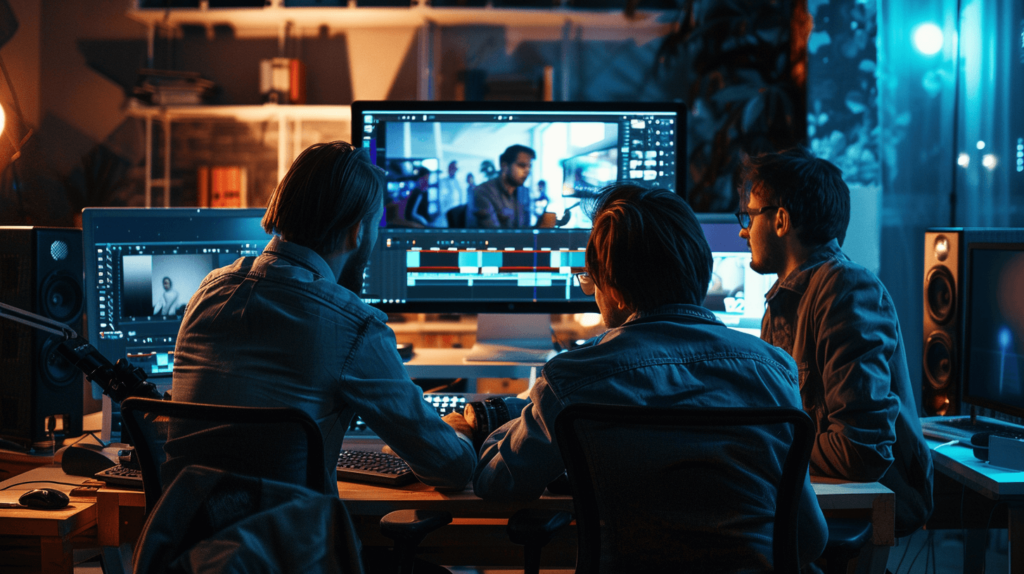
Filming is only one stage of production. Editing, sound mixing, colour correction, motion graphics, subtitles, and formatting can significantly affect the final result.
Communication
Clear communication is especially important for corporate projects where several stakeholders may be involved. A production team should understand the intended message and deliverables before filming begins.
Video Production in Dubai’s Business Environment
Dubai hosts a wide range of corporate events, exhibitions, conferences, commercial activities, and international business gatherings. This creates demand for video content that can work across different audiences and communication channels.
A production team may need to work in offices, hotels, exhibition venues, studios, outdoor locations, or other commercial spaces. Understanding the requirements of each environment can help the production process run more efficiently.
Dreambox states that its production services cover projects ranging from corporate and commercial videos to events, social media content, podcasts, testimonials, and animation.
From Filming to Final Delivery
Professional production does not end when filming finishes. Post-production brings the recorded material together into a coherent final video.
Editors may select the strongest footage, organize interviews, synchronize sound, add music, incorporate graphics, and apply colour correction. Depending on the project, subtitles or multiple aspect ratios may also be created.
For businesses, having versions prepared for different platforms can make the finished production more versatile. A longer corporate video, for example, may also produce shorter clips for social media or internal communications.
Questions to Ask Before Starting a Project
Before selecting a production partner, businesses can ask:
- What type of video is best suited to the communication objective?
- Who is the intended audience?
- What locations will be required?
- Will filming need one camera or multiple cameras?
- Is professional audio recording included?
- What post-production services are provided?
- How many revisions are included?
- Which formats and resolutions will be delivered?
- Are subtitles or multiple-language versions required?
- What is the expected production schedule?
Answering these questions early can make the scope of a project clearer and reduce misunderstandings later.
Conclusion
A professional video production company can support a project from its initial concept through filming and post-production, with the exact services depending on the project’s goals. Corporate films, commercials, social content, testimonials, interviews, and event coverage each require different approaches to planning and production. For live occasions, an experienced event videographer in Dubai can focus on capturing important moments while working within the practical constraints of a busy event environment. Ultimately, the most useful criteria when comparing production teams are relevant experience, portfolio quality, production workflow, technical capabilities, communication, and post-production support.