Healthcare facilities generate sharps waste every day, including needles, syringes, lancets, scalpels, and other items capable of puncturing skin. Because contaminated sharps can cause needlestick injuries and expose workers to bloodborne pathogens, they require controlled handling from the point of use through final treatment or disposal. Waste management and sharps disposal therefore depend on appropriate containers, staff training, safe storage, compliant transportation, and procedures that reflect applicable regulations. The Centers for Disease Control and Prevention (CDC) identifies sharps as a category of regulated medical waste requiring special handling and recommends that facilities maintain a plan for collection, handling, treatment, and disposal.
Why Is Proper Sharps Disposal Important?
Improper disposal can create several hazards. A needle placed in ordinary trash may puncture a waste bag and injure someone handling it later. Attempting to recap, bend, break, or manipulate a contaminated needle can also increase the opportunity for accidental exposure.
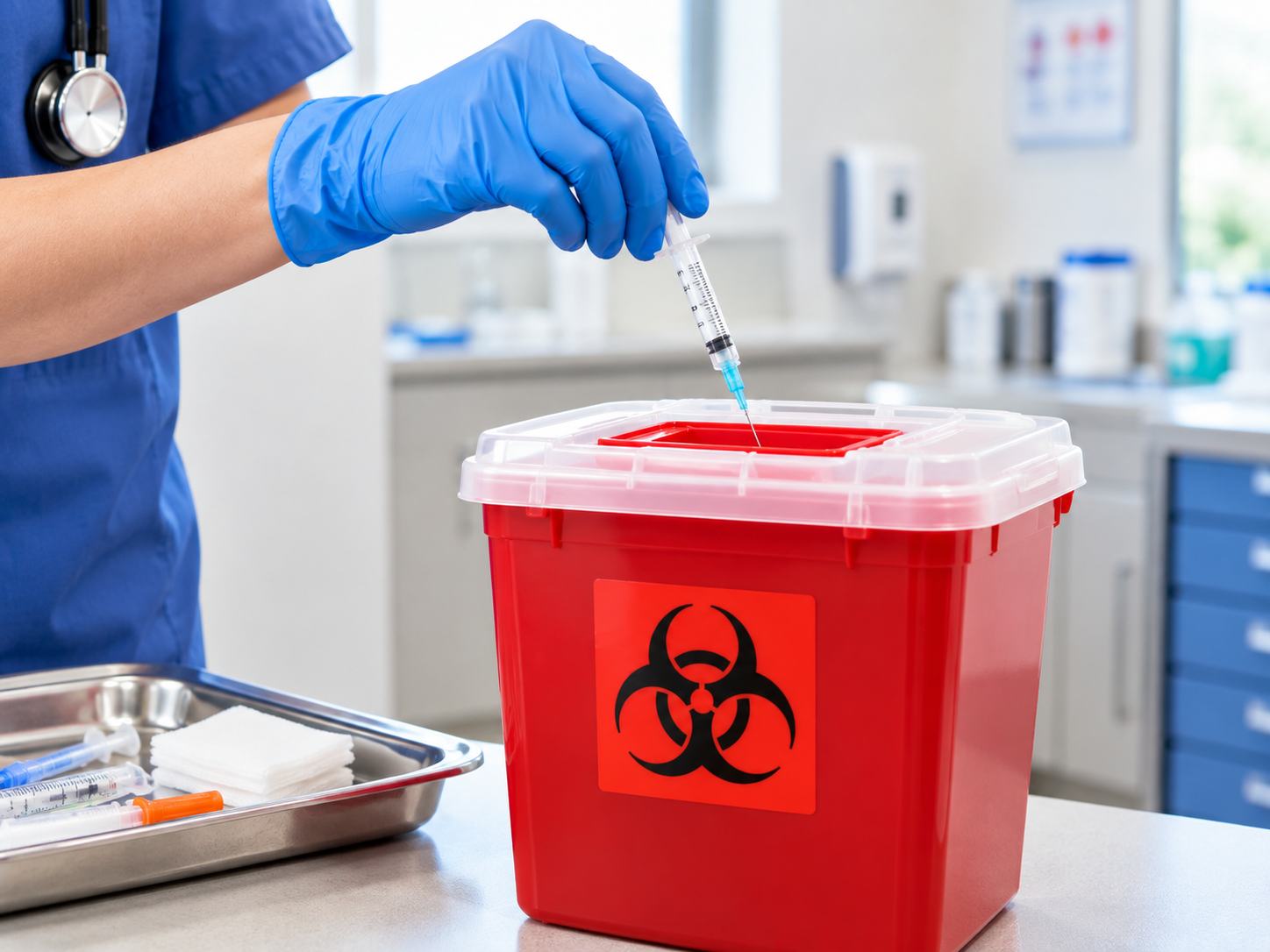
Effective waste management sharps disposal consequently begins at the point where the sharp is used rather than when a container is eventually transported away from the facility.OSHA requires contaminated sharps to be discarded immediately or as soon as feasible after use into appropriate containers. The containers must be closable, puncture-resistant, leakproof on the sides and bottom, and properly labeled or color-coded.
What Makes a Sharps Container Appropriate?
A suitable sharps container needs to withstand the physical characteristics of the waste it contains. OSHA specifies that containers for contaminated sharps should be puncture-resistant and leakproof on the sides and bottom. They must also be closable and appropriately labeled or color-coded. The container should remain upright during normal use and should not be filled beyond its designated capacity. Overfilling can allow sharp objects to protrude through the opening, increasing the likelihood of accidental punctures.
CDC guidance recommends closing a sharps container when it reaches its marked fill line or, when there is no fill line, at approximately three-quarters full.
How Is Medical Sharps Waste Transported?
Internal and external transportation require controlled handling because the risk does not disappear once a sharps container leaves the treatment area. CDC recommends that regulated medical waste awaiting treatment be stored appropriately and transported in closed, impervious containers when treatment is performed elsewhere.
Storage areas should be properly managed, adequately ventilated, and protected from unauthorized access and pests. Waste should not be allowed to accumulate unnecessarily.
Safe sharps handling requires attention at every stage, from immediate disposal after use to secure containment, storage, transportation, treatment, and final disposal. Waste management and sharps disposal should be based on established workplace procedures and the federal, state, and local requirements applicable to the facility.
How Can Facilities Improve Sharps Waste Management?
A consistent sharps management program should combine engineering controls, employee training, appropriate containers, routine inspections, and documented procedures. Staff should know where containers are located, what belongs inside them, when they need replacement, and how filled containers should be handled.
Facilities should also monitor containers to prevent overfilling and ensure that non-sharps waste is not placed inside them. CDC guidance specifically emphasizes staff education, fill-level monitoring, and preventing non-sharps from entering sharps containers.
Conclusion
A written waste management plan can help assign responsibilities and establish consistent procedures from point of generation through treatment and final disposal.
Properly positioned puncture-resistant containers, employee training, fill-level monitoring, and safe transportation can reduce preventable exposure risks. When facilities arrange hazardous waste pickup, they should also verify that the collection and downstream treatment process aligns with the requirements governing their specific waste stream and location.