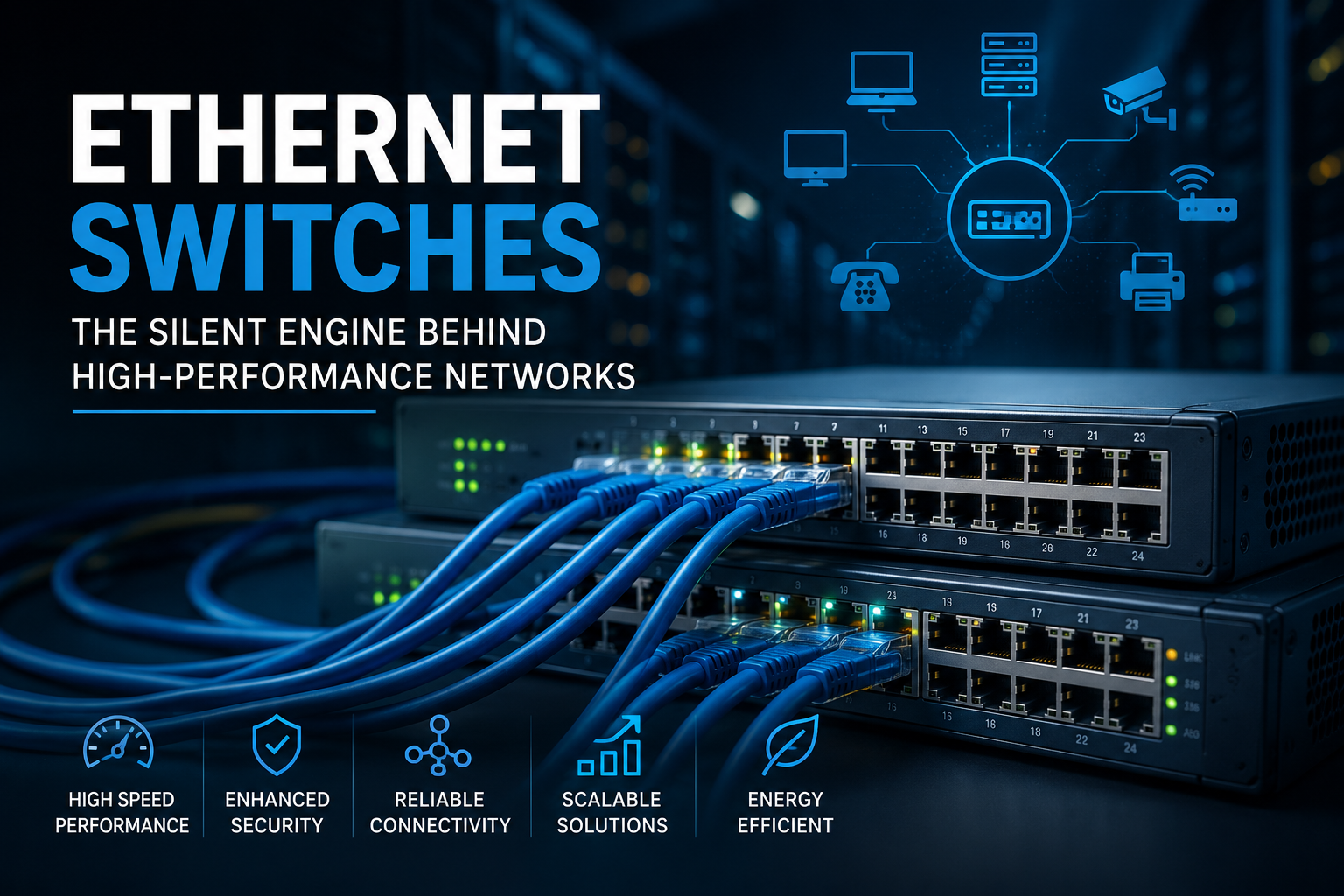
In today’s hyper-connected world, businesses, homes, data centers, and industrial facilities rely heavily on seamless digital communication. Whether people are streaming videos, conducting video conferences, transferring large files, or operating cloud-based applications, network performance has become a critical factor in productivity and user experience. Yet, behind every efficient network lies a technology that often goes unnoticed: ethernet switche.
While routers and Wi-Fi systems frequently receive attention, ethernet switches quietly perform the essential task of directing data traffic across networks. They act as intelligent traffic controllers, ensuring that information reaches the correct destination quickly and efficiently. Without ethernet switches, modern networks would struggle to maintain the speed, reliability, and scalability that users expect.
As organizations continue to embrace digital transformation, understanding the role of ethernet switches becomes increasingly important. This guide explores how ethernet switches work, why they matter, and how they contribute to high-performance networking environments.
The Foundation of Modern Networking
Ethernet technology has been a cornerstone of networking for decades. Since its introduction, it has evolved dramatically, supporting increasingly complex communication demands. However, the true effectiveness of Ethernet networks depends largely on the devices responsible for managing data flow.
Ethernet switches serve as central connection points within local area networks (LANs). Unlike older networking devices such as hubs, switches intelligently identify connected devices and forward data only where it needs to go. As a result, network congestion decreases, and communication becomes more efficient.
Furthermore, ethernet switches enable businesses to connect computers, servers, printers, cameras, storage devices, and countless other networked assets. This capability creates the infrastructure necessary for modern digital operations.
Understanding How Ethernet Switches Work
At their core, ethernet switches operate by learning the Media Access Control (MAC) addresses of devices connected to each port. When a device sends data, the switch examines the destination address and determines the most efficient path for delivery.
Instead of broadcasting data across every connection, the switch sends information directly to the intended recipient. Consequently, network traffic remains organized and efficient. This selective forwarding significantly improves performance compared to older networking technologies.
Moreover, ethernet switches maintain dynamic tables that continuously update device locations. As devices connect or disconnect from the network, the switch adapts automatically. This intelligence allows networks to operate smoothly even as environments become increasingly complex.
Why Ethernet Switches Are Essential for Network Performance
Network speed and reliability directly influence business productivity. Slow connections, packet loss, and network bottlenecks can disrupt operations and negatively affect user experiences. Ethernet switches play a critical role in preventing these issues.
By segmenting network traffic and reducing collisions, ethernet switches create dedicated communication channels between devices. This architecture minimizes delays and ensures that applications receive the bandwidth they require.
Additionally, ethernet switches support full-duplex communication. This means devices can send and receive data simultaneously, effectively doubling communication efficiency. As a result, organizations benefit from faster file transfers, smoother video conferencing, and improved overall network responsiveness.
Managed vs. Unmanaged Ethernet Switches
One of the most important decisions when selecting networking equipment involves choosing between managed and unmanaged ethernet switches.
Unmanaged switches provide simple plug-and-play functionality. Users connect devices, and the switch begins operating immediately without configuration. These switches work well for small offices and home networks where advanced controls are unnecessary.
Managed ethernet switches, on the other hand, offer extensive customization capabilities. Network administrators can monitor traffic, create VLANs, prioritize applications, and implement security policies. Consequently, managed switches are ideal for enterprise environments where performance optimization is essential.
Organizations experiencing rapid growth often prefer managed solutions because they provide greater visibility and scalability. Although managed switches require more expertise, they deliver significantly more control over network operations.
The Role of Ethernet Switches in Business Networks
Modern businesses depend on reliable communication systems. From cloud applications to Voice over IP (VoIP) services, nearly every business process requires network connectivity.
Ethernet switches serve as the backbone of these environments by connecting employees, servers, and digital resources. They ensure that critical applications receive adequate bandwidth while maintaining stable communication across departments.
Furthermore, ethernet switches support network segmentation through Virtual Local Area Networks (VLANs). VLANs allow organizations to separate traffic for security and performance purposes. For example, finance departments, guest users, and operational systems can operate independently while sharing the same physical infrastructure.
This flexibility makes ethernet switches invaluable tools for businesses seeking secure and efficient network management.
Power over Ethernet:
Power over Ethernet (PoE) has transformed how organizations deploy network-connected devices. Instead of requiring separate power cables, PoE-enabled ethernet switches deliver both data and electrical power through a single Ethernet cable.
This technology simplifies installations and reduces infrastructure costs. Devices such as IP cameras, wireless access points, VoIP phones, and security systems can operate without dedicated electrical outlets.
Additionally, PoE enhances deployment flexibility. Organizations can place devices in locations where traditional power sources are unavailable or impractical. Consequently, ethernet switches equipped with PoE capabilities have become increasingly popular across industries.
As smart buildings and Internet of Things (IoT) deployments continue to expand, PoE-enabled ethernet switches will play an even greater role in network design.
Ethernet Switches in Data Centers and Cloud Infrastructure
Data centers represent some of the most demanding networking environments in existence. These facilities process enormous amounts of information while maintaining strict performance requirements.
Ethernet switches form the foundation of data center networking. They facilitate communication between servers, storage systems, virtualization platforms, and cloud services. High-performance switches support advanced features such as low latency, high throughput, and redundancy.
Moreover, modern data center ethernet switches often include automation capabilities that streamline network management. Administrators can deploy configurations quickly and respond to changing business needs more effectively.
As cloud computing adoption continues to rise, the importance of reliable ethernet switches within data centers will only increase.
Security Benefits of Modern Ethernet Switches
Cybersecurity has become a top priority for organizations worldwide. While firewalls and antivirus software receive considerable attention, ethernet switches also contribute significantly to network security.
Managed switches support features such as access control lists, port security, network segmentation, and traffic monitoring. These capabilities help organizations detect suspicious activity and prevent unauthorized access.
Additionally, VLAN technology enables businesses to isolate sensitive systems from general network traffic. This segmentation reduces the potential impact of security incidents and improves overall protection.
By integrating security directly into the network infrastructure, ethernet switches help create more resilient and secure environments.
Choosing the Right Ethernet Switches for Your Needs
Selecting the ideal ethernet switches requires careful consideration of current requirements and future growth plans. Several factors should influence purchasing decisions.
Port count represents one of the most important considerations. Organizations should evaluate both existing device connections and anticipated expansion needs. Choosing a switch with sufficient capacity prevents costly upgrades later.
Speed capabilities also matter significantly. While Gigabit Ethernet remains common, many businesses are adopting multi-gigabit and 10 Gigabit solutions to support bandwidth-intensive applications.
Furthermore, buyers should assess management features, PoE requirements, security capabilities, and scalability options. By carefully analyzing these factors, organizations can invest in ethernet switches that deliver long-term value.
Emerging Trends Shaping the Future of Ethernet Switches
Networking technology continues to evolve rapidly. Consequently, ethernet switches are becoming more intelligent, automated, and capable than ever before.
Artificial intelligence and machine learning are increasingly influencing network management. Advanced switches can analyze traffic patterns, identify anomalies, and recommend performance improvements automatically.
Additionally, software-defined networking (SDN) is changing how organizations manage network infrastructure. SDN-enabled ethernet switches provide centralized control and greater operational flexibility.
The rise of edge computing, IoT devices, and high-bandwidth applications will further drive innovation in ethernet switch technology. Future switches will need to support greater speeds, enhanced security, and increased automation capabilities.
Conclusion:
Although they often operate behind the scenes, ethernet switches are among the most important components of modern networking infrastructure. They enable efficient communication, improve performance, enhance security, and support organizational growth.
From small home offices to massive cloud data centers, ethernet switches serve as the silent engine behind high-performance networks. Their ability to intelligently direct traffic ensures that users enjoy fast, reliable, and secure connectivity.
As digital demands continue to grow, the importance of ethernet switches will only increase. Organizations that invest in the right switching technology position themselves for greater efficiency, scalability, and long-term success in an increasingly connected world.