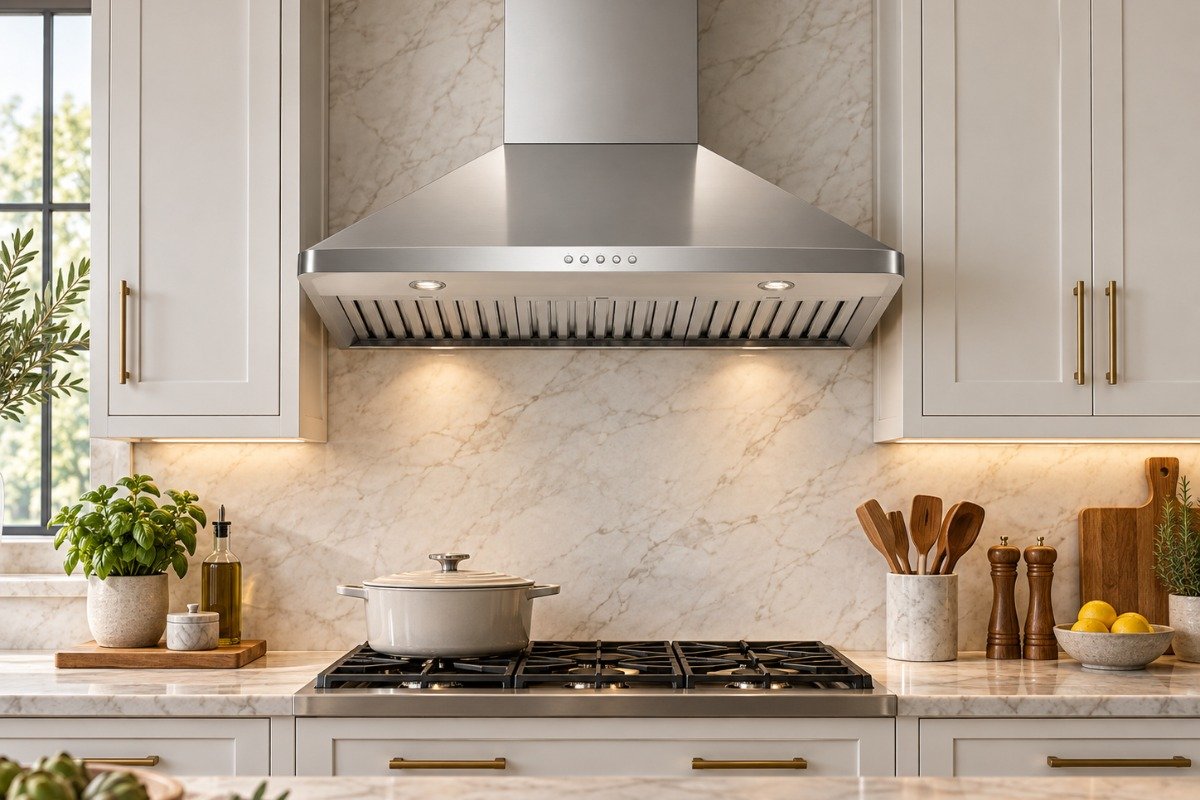
Kitchen ventilation is often an afterthought until smoke, grease, or lingering odors make it obvious that the existing setup isn’t keeping up. For larger cooktops or ranges, hood size matters just as much as fan power, since a unit that doesn’t fully cover the cooking surface leaves gaps where smoke and steam escape into the room. Anyone shopping for a 42 kitchen hood needs to think through a few practical factors before installation, since getting the size and mounting style right the first time avoids costly adjustments later.
Why Hood Size Should Match Cooktop Width
A general rule in kitchen design is that the hood should be at least as wide as the cooktop or range below it, and ideally a few inches wider on each side. A 42-inch hood is typically paired with a 36-inch range, giving enough overhang to capture rising smoke and steam even when pots are placed near the front burners. Undersized hoods force the fan to work harder to compensate, which increases noise and reduces overall efficiency over time.
CFM And Airflow Considerations
Cubic feet per minute, or CFM, measures how much air a hood can move, and this figure should scale with both hood size and cooking style. Households that cook frequently at high heat, sear meats, or use gas ranges generally need higher CFM ratings than those doing lighter, everyday cooking. A 42 kitchen hood with inadequate CFM will struggle to clear smoke quickly, leading to buildup on cabinets and walls near the cooking area over months of regular use.
Ducted Versus Ductless Installation
Ducted hoods vent air directly outside through ductwork, making them more effective at removing smoke, grease particles, and moisture from the kitchen entirely. Ductless models recirculate air through a filter and return it to the room, which is easier to install but less effective for heavy cooking. Kitchens undergoing renovation often have more flexibility to add ducting, while those retrofitting an existing space may need to weigh the trade-off between installation complexity and performance.
Mounting Styles And Kitchen Layout
Wall-mounted, under-cabinet, and island hoods each suit different kitchen layouts. A 42 kitchen hood mounted against a wall typically integrates with upper cabinetry, while island installations require ceiling mounting and additional structural support since there’s no adjacent wall to anchor into. Choosing the right style depends on where the cooktop sits relative to walls, ceiling height, and how much visual weight the household wants the hood to add to the room.
Noise Levels And Daily Usability
A powerful hood that’s too loud to run consistently doesn’t serve its purpose well. Sone ratings indicate how loud a fan is at various speeds, and many households end up under-using a high-CFM hood simply because the noise is disruptive during everyday cooking. Multi-speed controls help balance power and noise, letting users run the fan quietly for light cooking and increase output only when needed. For more on how proper ventilation benefits a kitchen day to day, this guide on 11 Benefits of a Range Hood covers the broader advantages worth considering.
Filter Maintenance And Long-Term Performance
Grease filters need regular cleaning to maintain airflow, since clogged filters force the fan to work harder and reduce overall extraction efficiency. Baffle filters are generally easier to clean and more durable than mesh filters, which tend to trap grease more readily. Establishing a simple monthly cleaning routine keeps a hood performing at its rated capacity and prevents grease buildup from becoming a fire hazard over time.
Conclusion
Selecting the right ventilation setup comes down to matching hood width, CFM, and installation type to the specific kitchen layout and cooking habits of the household, a decision made easier once you understand the 11 Benefits of a Range Hood beyond just smoke removal. A properly sized 42 kitchen hood paired with adequate airflow keeps smoke, grease, and odors from lingering, making daily cooking noticeably more comfortable. Taking the time to evaluate these factors upfront leads to a ventilation system that performs reliably for years without requiring costly upgrades.