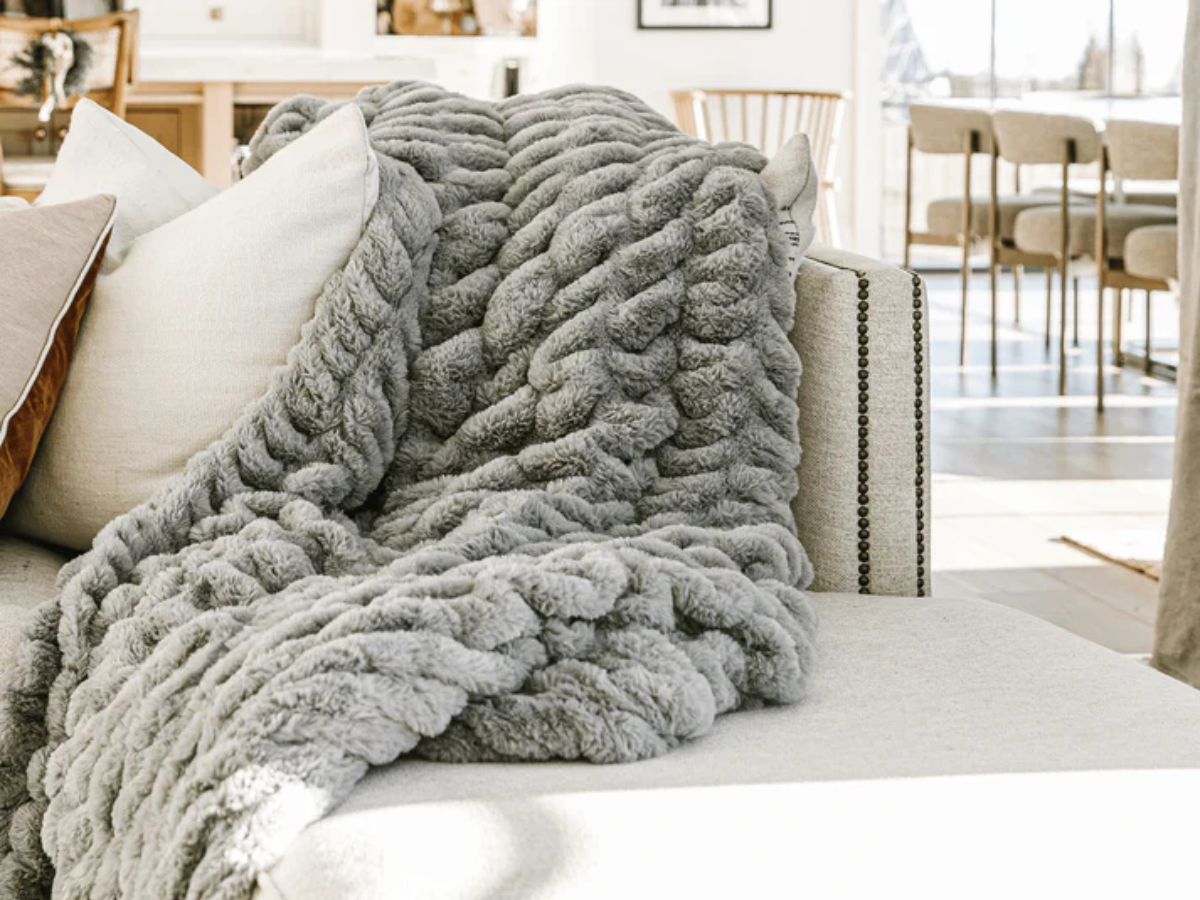
When temperatures drop, or you want a more substantial layer for relaxing at home, blanket weight can make a noticeable difference in how a blanket feels. Heavy blankets use denser fabrics, thicker construction, or extra layers to create a more substantial feel than lightweight alternatives. However, weight alone does not determine warmth. Material, weave, insulation, size, and airflow all influence how comfortable a blanket feels in different environments.
What Makes a Blanket Heavy?
A blanket can feel heavy for several different reasons. Some use thick yarns or dense woven fabrics, while others contain multiple layers or insulating fills. The overall weight may also increase with the blanket’s dimensions.
This distinction matters because a heavy blanket isn’t automatically warmer. Warmth depends largely on how effectively the material slows heat loss and retains air. Certain fabrics and constructions can provide substantial insulation without being extremely heavy.
Are Heavy Blankets Warmer?
The relationship between weight and warmth becomes particularly important when comparing blankets made from different materials. A lightweight blanket with insulating fibers may provide more warmth than a heavier blanket made from a compact, less insulating fabric.
Heavy blankets can feel warmer, but weight itself should not be treated as a direct measurement of insulation. A dense blanket may reduce airflow and provide greater coverage, while a thick, lofted material can trap air and slow heat transfer.
Which Materials Work Well for Heavy Blankets?
Material selection can significantly affect the feel, warmth, breathability, and durability of a blanket.
Fleece: Fleece is commonly used for warm blankets because its soft, insulating structure can retain heat while remaining relatively easy to handle.
Wool: Wool naturally provides insulation and can help regulate temperature. It is often selected for blankets intended for colder environments.
Cotton: Cotton is versatile and breathable. Depending on its weave and thickness, it can work for both lightweight and heavier blanket designs.
Plush synthetic fabrics: Materials with a soft, dense pile can create a substantial feel and are often associated with cozy winter bedding and throws.
Blended fabrics: Blends can combine characteristics from multiple fibers, such as softness, durability, warmth, and easier care.
The best choice depends on whether warmth, breathability, softness, durability, or ease of maintenance is the main priority.
How Does Blanket Construction Affect Warmth?
Two blankets with similar weights can feel very different because of their construction. Loft, layering, stitching, and weave all influence the amount of air held within the material.
The weave also influences breathability. Open constructions can allow greater airflow, while dense constructions may provide a more enclosed and substantial feel. This is why specifications such as material and construction are useful when evaluating heavy blankets, rather than looking only at the listed weight. A blanket with a textured or lofted construction may retain more air than a tightly compressed fabric. Air trapped within textile structures can slow the movement of heat, contributing to insulation.
How Can You Choose the Right Heavy Blanket?
Start by identifying when and where you plan to use it. A blanket intended for cold winter nights may need different characteristics from one used throughout the year.
Consider these factors:
- Material: Choose based on warmth, softness, breathability, and care requirements.
- Weight: Look for a substantial feel without choosing weight solely as a measure of warmth.
- Size: Select dimensions that provide appropriate coverage for the intended use.
- Construction: Examine the weave, layers, and overall structure.
- Maintenance: Check washing and drying instructions before purchasing.
- Season: Consider whether the blanket will be used primarily during winter or across multiple seasons.
Conclusion
Choosing blankets involves more than selecting the heaviest option available. Material, insulation, construction, size, breathability, and intended use all influence how a blanket performs and feels. For everyday relaxation, consider how much coverage and warmth you actually need before selecting a couch throw blanket. Looking at the complete combination of fabric, construction, weight, and care requirements can help you find a blanket suited to your space and seasonal needs.