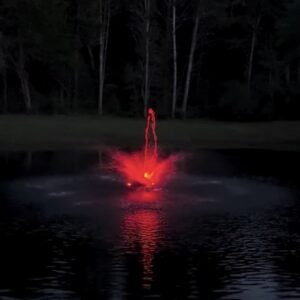
Water features can become the focal point of an outdoor space during the day, but their visual impact does not have to disappear after sunset. The right lighting can illuminate moving water, highlight fountain patterns, and create a more inviting atmosphere around a pond. Choosing pond fountain lights involves more than selecting a fixture based on appearance. Factors such as placement, brightness, color temperature, water exposure, power requirements, and maintenance all affect the final result.
Whether the goal is subtle landscape lighting or a more dramatic nighttime display, understanding the available options makes it easier to create a safe and attractive pond environment.
Why Pond Lighting Makes a Difference
A pond can look completely different after dark. Lighting adds depth by revealing water movement and drawing attention to architectural or natural features that may otherwise become difficult to see.
Strategically positioned pond fountain lights can emphasize the height and shape of a fountain stream. When light is directed through moving water, changing patterns can create a dynamic effect rather than simply illuminating the surface.
Lighting can also help define the area surrounding a pond. A softly illuminated water feature may complement pathways, landscaping, seating areas, or patios without requiring excessive brightness throughout the entire yard.
The key is balance. Too little light may make the fountain difficult to appreciate, while excessive brightness can overpower the surrounding landscape and reduce the visual contrast that makes water features interesting.
Understanding Different Lighting Positions
The location of a light has a major influence on how a fountain appears at night. Common approaches include placing fixtures underwater, near the edge of the pond, or around the fountain structure.
Underwater fixtures can illuminate water from below, making streams and spray more visible. Lights positioned near the edge can provide broader illumination and highlight the surface of the pond. When planning pond fountain lights, consider the viewing angle first. A light that looks impressive from one side may produce glare when viewed from another. Positioning should therefore account for where people are most likely to sit, walk, or observe the pond.
Consider the Fountain Before Selecting Fixtures
The fountain itself should guide the lighting plan. A small decorative fountain may need only a few strategically positioned fixtures, while a large fountain with multiple streams may require several points of illumination.
Think about:
- Fountain height and spray pattern
- Pond size and depth
- Number of water streams
- Primary viewing direction
- Distance between the pond and electrical source
- Desired brightness
- Desired lighting color
- Accessibility for cleaning and maintenance
Think About Maintenance Before Installation
Even well-designed outdoor lighting requires occasional maintenance. Leaves, algae, sediment, and mineral deposits can reduce light output or obscure the fixture surface.
Regular inspection can help identify problems before they become larger issues. Depending on the pond, maintenance may include cleaning fixture lenses, checking connections, removing debris, and inspecting cables for damage. A pond fountain lights system that is easy to access and maintain is generally more practical than one that looks impressive initially but requires difficult servicing.
The surrounding landscape matters as well. Overgrown plants can eventually block light and change the intended appearance of the fountain. Trimming vegetation around viewing areas can restore visibility without increasing fixture brightness.
Final Thoughts
The best pond fountain lights combine visual appeal, appropriate brightness, reliable construction, and safe installation. Instead of choosing fixtures solely for appearance, consider the fountain’s design, viewing angles, water conditions, electrical requirements, and long-term maintenance needs. Thoughtful positioning can make streams and spray more visible while preserving a comfortable nighttime atmosphere.
For homeowners planning a floating fountain for pond settings, coordinating the fountain’s movement, lighting position, and viewing area can produce a more consistent nighttime display. With careful planning and proper electrical protection, pond lighting can extend the enjoyment of an outdoor water feature well beyond daylight hours